See the top-rated abstracts at IASLC’s 2023 Latin America Conference (LALCA) during the Presidential Symposium, which will take place from 09:45-10:45 on Friday morning, January 27. For 20 years, LALCA has been highlighting the latest in lung cancer research, innovation, and multidisciplinary care. We are excited that as we return to an in-person format for the first time since 2019, we have more than 100 abstract submissions. As a result, the large number of high-quality abstracts made it difficult to choose the best of the best.
After reviewing and rating the abstract submissions, LALCA’s conference chairs rated the following three abstracts the highest and selected them for the Presidential Symposium. Following the presentation of the abstracts, renowned clinician-scientist David Gandara, MD, of the University of California, Davis, will review and discuss the research and its therapeutic implications.
TP53 Mutations in Patients with African Ancestry Associated with Poorer Prognosis
PhD student Rodrigo de Oliveira Cavagna, of Barretos Cancer Hospital, Brazil, will begin with the presentation of his abstract “Disruptive and Truncating TP53 Mutations Are Frequent in Lung Adenocarcinoma Patients with African Ancestry and Show Worse Prognosis.”
The study included 446 Barretos Cancer Hospital patients diagnosed with non-small cell lung cancer (NSCLC). TP53 mutational status was routinely evaluated by a targeted panel using next-generation sequencing (NGS). Genetic ancestry was evaluated using 46 ancestry-informative markers representing four populations (European, African, Asian, and Native American. They concluded that TP53 genes are frequently mutated in Brazilian patients with lung adenocarcinomas, and mutations classified as disruptive and truncating are associated with higher African genetic-ancestry background and shorter overall survival.
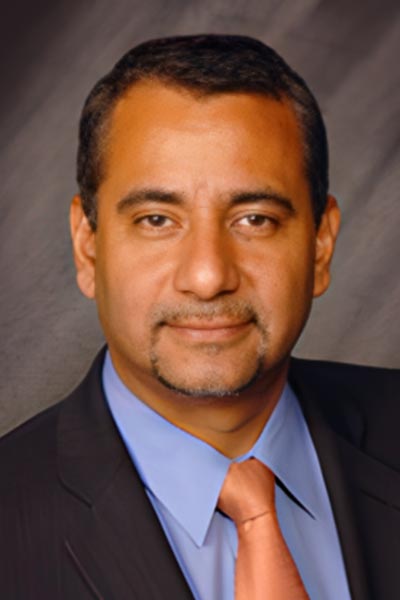
Research Shows Most NSCLC Patients can Begin Therapy Based on Liquid Biopsy Results
Luis E. Raez, MD, of Memorial Healthcare System in Miami, will then present “Using DNA Next-Generation Sequencing in Blood to Guide Therapy for Newly Diagnosed Stage IV Non-Small Cell Lung Cancer (NSCLC) Patients.” This is an analysis of 170 patients diagnosed with metastatic NSCLC treated at Memorial Cancer Institute. NGS was conducted on each patient with tumor biopsies and liquid biopsies concomitantly.
The research demonstrated that most metastatic NSCLC patients (70%) can start therapy based on liquid biopsy results because of the effective detection of actionable genes and faster turnaround time (9 days vs 28 days for tissue NGS). This strategy had no adverse effect on survival outcomes compared to relying on tissue NGS. The authors concluded that liquid biopsies could be considered a “standard of care” to guide first-line therapy decisions in most patients with metastatic NSCLC without the need to wait for tissue NGS results.
Gene Panel Successfully Stratifies Patients by Risk
Finally, master’s degree student Alexia Siqueira, also of Barretos Cancer Hospital, Brazil, will present “12-Gene Expression Signature: A Potential Key for Predicting Prognosis and Benefit to ACT for Resectable NSCLC Patients.” The retrospective study included 172 surgically resected NSCLC patients with a 5-year follow-up (60 months) from institutions located in Brazil and Portugal. Researchers evaluated gene expression from 100ng of RNA by nCounter® Elements XT panel.
The 12-gene panel was composed of the following genes: ATP8A1, AURKA, C1orf116, COL4A3, DOCK9, HOPX, HSD17B6, IFT57, MBIP, NKX2-1, RRM2 and TTC37, as well as seven housekeeping genes. All patients received adjuvant chemotherapy. The 12-gene panel successfully stratified resected NSCLC patients into high- and low-risk groups regardless of chemotherapy treatment.
Find more top-rated abstract presentations during Poster Discussion #1 and Poster Discussion #2, both of which will take place from 1:15 – 2:15 PM, Thursday, January 26. Following the oral abstract presentations, experts David Carbone, MD, PhD, professor of medicine at Ohio State University, and Rafael Rosell, MD, PhD, director of the Rosell Lab, will review and discuss the research.