The first-ever trial of first-line combination therapy with atezolizumab plus chemotherapy, specifically in older patients with advanced non-small cell lung cancer (NSCLC), demonstrated improved progression-free survival (PFS); however, the IFCT-1805 ELDERLY study showed no improvement in overall survival (OS) compared with chemotherapy alone.

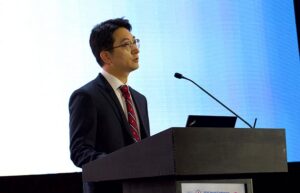
“Half of all patients with non-small cell lung cancer are older than 70 years old, and age at diagnosis keeps increasing,” said Céline Mascaux, MD, PhD, Professor of Thoracic Oncology at the University Hospital of Strasbourg, Strasbourg, France. “But immunotherapy for elderly patients with NSCLC relies on data from very small cohorts, particularly for patients aged more than 75 years, who may benefit less from immunotherapy than younger patients. Dedicated trials for elderly persons are needed.”
Dr. Mascaux presented results of IFCT-1805 ELDERLY during the oral abstract session, Immunotherapy for Special Populations, at the 2025 World Conference on Lung Cancer.
Immune checkpoint inhibition plus chemotherapy is standard of care for the general population, Dr. Mascaux noted, but earlier trials of immunotherapy for NSCLC had limited numbers of patients aged 75 years old and older. In the absence of robust data, guidelines from the National Comprehensive Cancer Network and the European Society for Medical Oncology were vague and non-specific, she said.
IFCT-1805 ELDERLY randomly assigned 510 patients aged 70 to 89 years to carboplatin/paclitaxel plus atezolizumab (340 patients) or carboplatin/paclitaxel (170 patients). Patients were stratified by histology (squamous vs. non-squamous), age (70-79 vs. 80-89), and PD-L1 expression (0 vs. ≥ 1 vs. unknown).
The primary endpoint was OS. Secondary endpoints included PFS, best response rate, duration of response (DOR), and safety.
The median age was 76, about a quarter of patients were female, and 76% had non-squamous histology. Patients were followed for a median of 38 months.
The median OS was 18.6 months for combination therapy versus 15 months for chemotherapy alone (hazard ratio [HR] 0.87 [95% CI 0.70-1.08, p = 0.20]). There was no significant difference in OS by age or histology. PD-L1 expression < 1 had prognostic value but was not predictive of benefit.
PFS was 7.4 months for combination therapy versus 5.6 months for chemotherapy alone (HR 0.55 [95% CI 0.44-0.67, p < 0.0001]). All subgroups had a similar PFS benefit.
Objective response rates were higher for combination therapy, 51.2% versus 41.8% (p = 0.04), as was DOR, 6.7 months versus 3.8 months (HR 0.45 [95% CI 0.33-0.61, p< 0.0001]). More than half the patients in the chemotherapy arm (56.1%) received immunotherapy as a second-line treatment.
Adverse events (AEs) were reported by virtually all patients in both arms, but combination therapy featured a higher incidence of grade ≥ 3 treatment-related adverse events (TRAEs) (71.4% vs. 61.9% [p = 0.032]) and any grade serious TRAEs (23.8% vs. 8.3% [p < 0.001]). The most common immune-specific AEs were thyroid dysfunction, rash, pruritus, arthralgia, aminotransferase abnormalities, and hyperglycemia.
“There was no statistically significant improvement in OS, likely linked to the fact that more than 56% of second-line treatment included immunotherapy,” Dr. Mascaux said. “As a result, the standard arm overperformed. The addition of atezolizumab significantly improved all secondary endpoints independent of PD-L1 expression, and significantly higher toxicity was seen with the addition of atezolizumab to chemotherapy in elderly patients. Additional ancillary studies are currently ongoing to look for biomarkers that may identify predictive factors of efficacy and toxicity.”