


In thoracic oncology, surgeons generally make two key groups of decisions: whether to operate on a patient and what their plan or strategy will be during the operation.
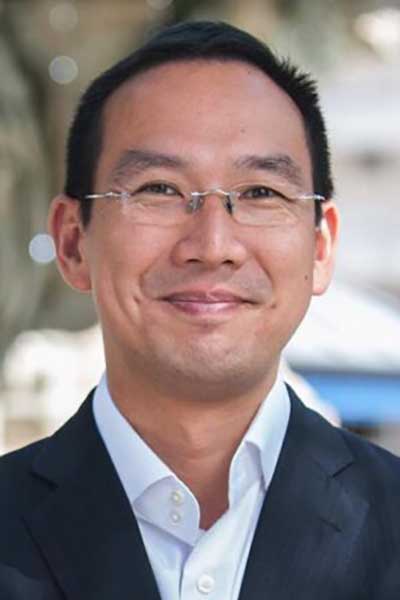
During a presentation at the 2026 World Conference on Lung Cancer (WCLC), Kelvin Lau, BA, MA, MBBS, PhD, FRCS, discussed the potential of artificial intelligence (AI) to address these types of questions in surgical decision-making during the Scientific Plenary Including Lectureship Award Presentations.
Dr. Lau’s presentation, titled Perspective of AI in Clinical Decision-Making for Lung Cancer (Surgeon), is available for on-demand viewing to registered WCLC 2026 attendees.

Scientific Plenary Including Lectureship Award Presentations
Perspective of AI in Clinical Decision-Making for Lung Cancer (Surgeon)
Registered WCLC 2026 attendees can review all the expert insights and key takeaways from the Scientific Plenary now through the online meeting platform. WATCH NOW
Dr. Lau began by discussing risk prediction.
“We’ve been predicting risk for many, many years, but actually thoracic surgeons can be particularly bad at predicting risk,” Dr. Lau said.
He noted that, while the Thoracoscore is the most widely used tool, it is a very blunt instrument and primarily predicts mortality.
“Many studies over the years have shown that it does not correlate with observed mortality in different populations, and most people actually don’t use it,” Dr. Lau said. “So, many groups have attempted to improve on this with the capabilities of AI.”
Dr. Lau said that predicting pathological complete response (pCR) has been a particular area of excitement among researchers in recent years.
“CheckMate 816 demonstrated very impressively that if you achieve a pCR, [there is a significant reduction in the risk of death]. The next question is: if they are ‘cured,’ who needs surgery?” Dr. Lau said. “But it’s a chicken-and-egg situation, isn’t it? You don’t know it’s pCR until you’ve removed the tumor, and by then, you’ve performed the operation.”
He highlighted a study from China that evaluated the performance of the NeoPred model, which aimed to predict pCR by analyzing pre-treatment scans before chemo-immunotherapy and pre-surgery scans after chemo-immunotherapy. When comparing the NeoPred model to an expert radiologist, the AI model was able to identify pCR on the pre-treatment scan, whereas the radiologist was not.
The data showed that the NeoPred model outperformed an unassisted radiologist in discriminating pCR on the pre-treatment scan. It also significantly enhanced the radiologist’s performance.1
“So, will I be replaced by AI? Well, it’s not quite that simple,” Dr. Lau said.
While robotic surgeries already assist surgeons, he noted that these are essentially remote-controlled arms and still require a brain to perform operations. Meanwhile, large language models (LLMs)—such as Claude and ChatGPT—remain confined to the digital world.
An LLM would likely be unable to perform surgery on its own, Dr. Lau noted, because it cannot physically interact with the outside world. Instead, a vision-language-action (VLA) model would be needed in order to convert visual sensory input into actions.
A current hurdle for the VLA in surgery is the lack of an extensive library of operations available for AI to learn from. However, Dr. Lau noted that there is a community currently looking into open-source operation libraries, which AI is already trying to learn from.
Once the AI model understands the architecture and language, it can begin to learn from them. Dr. Lau explained that modern robots are equipped to provide all the necessary data for learning and record everything that occurs—not only at the operation level but also including environmental variables and kinematic data.
He shared several examples of autonomous operations in which these robotic tools have adjusted their positions to avoid hitting certain arteries or demonstrated an ability to gauge how much force to apply when tying a knot.
“These robots are learning and adapting to the environment,” Dr. Lau said. “They are breaking out of the ‘jail bars’ of the digital world into the real world.”
However, Dr. Lau noted an important limitation to these tools: no matter how many videos are available, you cannot train robots for rare events.
There are potential digital solutions such as oversampling, simulation, and transfer learning from other specialties. It may ultimately require anomaly detection to enable robots to recognize when to stop, along with possible human intervention. Another challenge will be teaching AI to communicate with the surgical team if and when a rare event occurs.
“If you observe a surgeon during an operation and something unexpected happens, it becomes an exercise in communication because they are not on their own trying to correct the situation,” Dr. Lau said. “Is the robot whose arms are simply performing the surgery able to communicate and coordinate with a team? This may be another completely different architecture needed to train the robot to do so.”
Dr. Lau concluded by noting that, while AI can assist surgeons with predictive tasks, there are still key limitations that will need to be addressed before autonomous surgery replaces surgeons.
References:
- 1. Zheng J, Yan Z, Wang R, Xiao H, Chen Z, Ge X, Li Z, Liu Z, Yu H, Liu H, Wang G, Yu P, Fu J, Zhang G, Zhang J, Liu B, Huang Y, Deng H, Wang C, Fu W, Zhang Y, Wang R, Jiang Y, Lin Y, Huang L, Yang C, Cui F, He J, Liang H. NeoPred: dual-phase CT AI forecasts pathologic response to neoadjuvant chemo-immunotherapy in NSCLC. J Immunother Cancer. 2025 May 31;13(5):e011773. doi: 10.1136/jitc-2025-011773. PMID: 40449955; PMCID: PMC12163334.