PD-1/PD-L1 inhibitors combined with chemotherapy remain an established first-line treatment regimen for patients with advanced squamous non-small cell lung cancer (NSCLC). However, relatively few studies have demonstrated significant improvements in overall survival (OS).

The phase III HARMONi-6 (NCT05840016) trial evaluated the efficacy of ivonescimab plus chemotherapy versus tislelizumab plus chemotherapy in patients with advanced squamous NSCLC. Ivonescimab—a PD-1/VEGF dual-target bispecific antibody—has been approved in China for two lung cancer indications since 2024.
“The interim analysis of progression-free survival (PFS), which I presented last year during the ESMO (European Society for Medical Oncology) Congress, already demonstrated that ivonescimab plus chemotherapy significantly improved PFS (median PFS: 11.1 months vs. 6.9 months),” said Shun Lu, MD, PhD. “But can this PFS benefit translate into OS?”
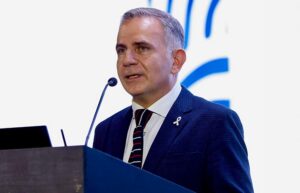
Dr. Lu, Shanghai Chest Hospital, Jiao Tong University School of Medicine, Shanghai, China, presented the results of the pre-specified OS interim analysis from the HARMONi-6 study at the 2026 American Society of Clinical Oncology (ASCO) Annual Meeting.
Study Design
A total of 532 patients were randomly assigned in a 1:1 ratio (n = 266 patients per arm) to receive either ivonescimab (20 mg/kg) or tislelizumab (200 mg/kg) every three weeks, each in combination with carboplatin and paclitaxel, for up to four cycles.
This was followed by maintenance therapy with either ivonescimab or tislelizumab monotherapy for up to 24 months. Randomization was stratified by disease stage and PD-L1 tumor proportion score (TPS).
The multicenter, randomized, double-blind, parallel-controlled study evaluated patients who met the following eligibility criteria:
- Pathologically confirmed squamous NSCLC
- Stage IIIB to IV
- No prior systemic therapy
- No EGFR mutations or ALK rearrangements
- ECOG performance status of 0 or 1
The primary endpoint was PFS assessed by an independent radiographic review committee (IRRC), and OS was a key secondary endpoint. Other secondary endpoints included investigator-assessed PFS, overall response rate (ORR), disease control rate (DCR), time to response (TTR), and safety.
A hierarchical testing strategy was applied, with PFS tested first at a one-sided alpha level of 0.025. Formal OS testing was enabled using the same alpha level if PFS was statistically significant. The pre-specified interim OS analysis was conducted at 204 events.
Outcomes and Safety
Ivonescimab in combination with chemotherapy significantly improved OS compared with tislelizumab plus chemotherapy (median OS: 27.89 months with ivonescimab vs. 23.89 months with tislelizumab; hazard ratio [HR]: 0.66; p value = 0.0017).
“The median OS in the ivonescimab group would not have been reached without the last single event,” Dr. Lu said. “The OS benefit was consistent across key subgroups, including sex, age, ECOG performance status, disease stage, PD-L1 expression, and brain metastases.”
Dr. Lu said ivonescimab combined with chemotherapy demonstrated a manageable safety profile in patients with squamous NSCLC, with no new safety signals observed. Additionally, he said toxicity levels were similar between the two groups:
- Grade 3 or higher treatment-related adverse events (TRAEs): 69.2% with ivonescimab versus 58.9% with tislelizumab
- Serious TRAEs: 41.4% with ivonescimab versus 34.3% with tislelizumab
- TRAEs leading to discontinuation: 5.3% with ivonescimab versus 4.5% with tislelizumab
- TRAEs leading to death: 3.8% with ivonescimab versus 4.2% with tislelizumab
Possible VEGF-related adverse events (AEs) occurred more frequently in the ivonescimab group; however, these were mostly grade 1 or 2, Dr. Lu said.
Future Directions
The HARMONi-6 findings show that ivonescimab combined with chemotherapy yielded a significant OS benefit as a first-line treatment in advanced squamous NSCLC, compared with tislelizumab plus chemotherapy.
Additionally, the ivonescimab-chemotherapy treatment regimen exhibited a safety profile comparable to that of tislelizumab plus chemotherapy, with similar rates of AEs leading to death or treatment discontinuation in both groups.
“The HARMONi‑6 results support the adoption of ivonescimab plus chemotherapy as a new standard of care for patients with advanced squamous NSCLC in the first‑line setting,” Dr. Lu said.
HARMONi-3, a global phase III study, is currently underway. The trial is evaluating ivonescimab plus chemotherapy versus pembrolizumab combined with chemotherapy as a first-line treatment for metastatic NSCLC.