






In 2023, the IASLC and the Lung Cancer Research Foundation (LCRF) launched a joint team science award to advance therapies toward a cure for oncogene-driven lung cancers. The award provides a 4-year, $2.5 million grant aimed at driving science forward faster by supporting collaborative research efforts among different oncology teams.
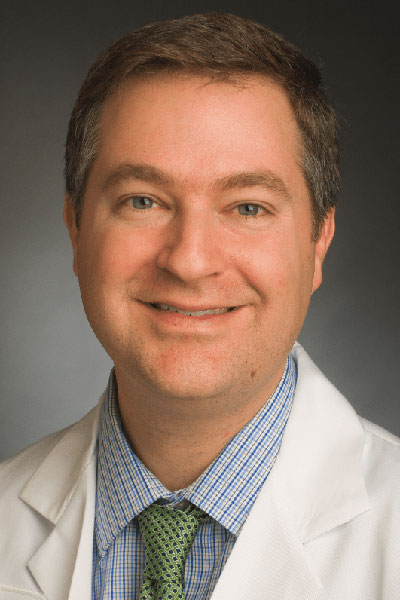
David A. Barbie, MD, Director of the Lowe Center for Thoracic Oncology at the Dana-Farber Cancer Institute and an Associate Professor at Harvard Medical School, Boston, was the first recipient of the 2024 IASLC-LCRF grant program.
His research team includes Eric Smith, MD, PhD, and Pasi Jänne, MD, PhD, from Dana-Farber Cancer Institute; Aaron Hata, MD, PhD, from Massachusetts General Hospital, Boston; and Shunsuke Kitajima, PhD, from the Japanese Foundation for Cancer Research, Tokyo.
The team has been focusing their research efforts on two distinct projects, both aimed at eradicating drug-tolerant persister (DTP) cells using the immune system. Another goal of the project is not only to translate these diverse findings into a cohesive therapy but also to broaden the work beyond EGFR-mutant lung cancer.
“Although we’ve made huge strides in lung cancer with targeted therapy against oncogene-driven lung cancer, patients inevitably relapse in the advanced stage setting,” Dr. Barbie said. “With targeted therapy, you can shrink the tumor; however, there are residual cells that hide within the scar, and, ultimately, those cells can relapse.”
Aim 1: Converting Pro-Tumorigenic Programs Into Anti-Tumorigenic Responses
In EGFR-mutant lung cancer, when DTP cells are generated, they begin to activate certain immune pathways. These are innate, viral-like programs inside the cells, which are often activated in response to viruses.
Those viral-like programs have been shown to be pro-tumorigenic, so the first aim of the project asked whether they could be converted into anti-tumorigenic responses.
“If we already know there are viral-like programs in the persister cells that are capable of recruiting T cells, can we amplify those so that we can unleash these viral-like programs in the persister cells?” Dr. Barbie asked.
In both EGFR and in RAS/KRAS-mutant lung cancer models, the team found that this antiviral program is further unleashed when DTP cells form, triggering a strong interferon response. A gene called TREX1 acts like a brake, restraining the level of interferon response.
They discovered that if you eliminate TREX1—not in the persister cells, but in general—the cells spontaneously hyperactivate and kill themselves from the excessive interferon response.
Initially, the team predicted that knocking out TREX1 in DTPs would amplify the antiviral response in a way that helped macrophages consume these cells more efficiently, and that adding macrophages or T cells would allow each immune cell type to eliminate these persister cells. While knocking out TREX1 amplified the activation as predicted, the absence of TREX1 did not enhance the activity of the macrophages or the T cells.
“We’re aiming to identify the factor that’s inhibiting the activity of these immune cells. By identifying these, we can neutralize it to make our therapy more effective,” Dr. Barbie said. “The biggest milestone is to understand how to both activate the innate immune response with this TREX1 knockout and how to prevent negative consequences of that.”
Aim 2: Using CAR T Cells
While the team’s first aim focuses on rewiring DTPs’ internal signaling, the second project takes an outside-in approach. Aim 2 is geared toward engineering the TROP2-directed CAR T cells to be tumor specific.
“The idea is, can you identify cell-surface targets on the persister cells and then infuse CAR T cells?” Dr. Barbie asked.
CAR T cells are essentially T cells designed to function like antibodies, he said. The tip of the CAR binds to the cell surface and can eradicate myeloma cells and other cells in liquid tumors, but this hasn’t worked in solid tumors yet.
While these TROP2 CAR T cells can work effectively, they can potentially attack healthy tissue. The team initially sought targets that were mutually exclusive on normal tissues. In other words, creating a CAR T cell with two receptors, so that both targets must be on the persister cell to fully activate. If a normal cell only carries one receptor, the healthy tissue is spared.
The team searched for various cell surface targets that might be mutually exclusive. Leveraging their knowledge from their research on how DTP cells can develop this antiviral program, they considered whether there could be an interferon-inducible gene on the cell surface of the cancer cells together with the TROP2. They discovered a promising target: CD38.
“We’re extremely excited about this target. It has been previously reported that interferons can induce CD38, but we found that CD38 is induced by the interferons and in these DTP cells,” Dr. Barbie said.
Using CAR T cells against CD38, they found that these cells can attack DTP cells from the EGFR models and from the RAS models, similar to what had been demonstrated with the TROP2 CAR T cells. CD38 is normally found in the hematopoietic system, whereas TROP2 is only expressed in the epithelial cells. Others have tried to engineer CD38 CAR T cells before, but the cells destroy themselves because CD38 is on the T cells.
Going into year two of their research, Dr. Barbie and his colleagues plan to develop AND‑gated TROP2 and CD38 CAR T cells. Ideally, the TROP2 requirement will prevent the CD38 CAR T cells from destroying themselves and attacking normal myeloid cells. Meanwhile, the CD38 requirement will prevent the TROP2 CARs from damaging the lungs and normal tissue, while they collectively kill the DTP cells.
“Our collaborator in Japan has successfully engineered mouse models of the TROP2 that we proposed, so we can also test this in these mouse tumor models,” Dr. Barbie said. “For the second aim, we have now found what we think is the ideal so‑called AND‑gate partner to make this TROP2 CAR safe and selective.”
A Year in Review: From Initial Proposal to Clinical Trial Prospects
Beyond the funding, this grant has provided Dr. Barbie and his team with a solid infrastructure of collaboration. The teams regularly meet to review the progress with each project. It’s also allowed each member to exchange—and even converge—ideas across teams.
Dr. Barbie said the cross-team collaboration has allowed the group to communicate in a way single research teams don’t often experience. This has helped ideas, such as the CD38 validation, start off small and grow into something potentially transformative.
“If we were just one lab, we might doubt ourselves. But when we’re all in the same meeting, see the same data, and collectively say ‘that’s the target to go after,’ it really increases our confidence that we’re on the right track,” Dr. Barbie said.
When Dr. Barbie and his team were first announced as the IASLC-LCRF Team Science Award recipients, he said the impact of the research would hopefully result in a clinical trial. Now, with a full calendar year of research underway, Dr. Barbie is even more optimistic about the prospect for both projects.
While the TREX1 findings will likely move slower, due to the pharmaceutical developments underway for TREX1 inhibitors, the regulatory path to advance CAR T cells in patients appears to be much faster.
Going into year two, Dr. Barbie says the greatest milestone he hopes to achieve for Aim 2, specifically, will be to validate the AND‑gated CD38/TROP2 CARs and show that they’re effective at preventing the CAR Ts from killing themselves and at killing the DTP cells.
“We’re very excited about the TROP2 CD38 CAR, because it can move very quickly once we’ve validated it. TROP2 CAR T cells are already being tested in patients in China,” Dr. Barbie said. “If we can validate the CD38 AND‑gated CAR may work on its own—even without needing the TREX1 inhibitor—it could accelerate quite quickly over the next one to two years.”