

Immune checkpoint inhibitors (ICIs) have shown promise in improving outcomes for limited-stage small cell lung cancer (LS-SCLC), bringing new hope to patients. However, not all patients benefit equally, reinforcing a need to identify predictive biomarkers to help guide treatment decisions.
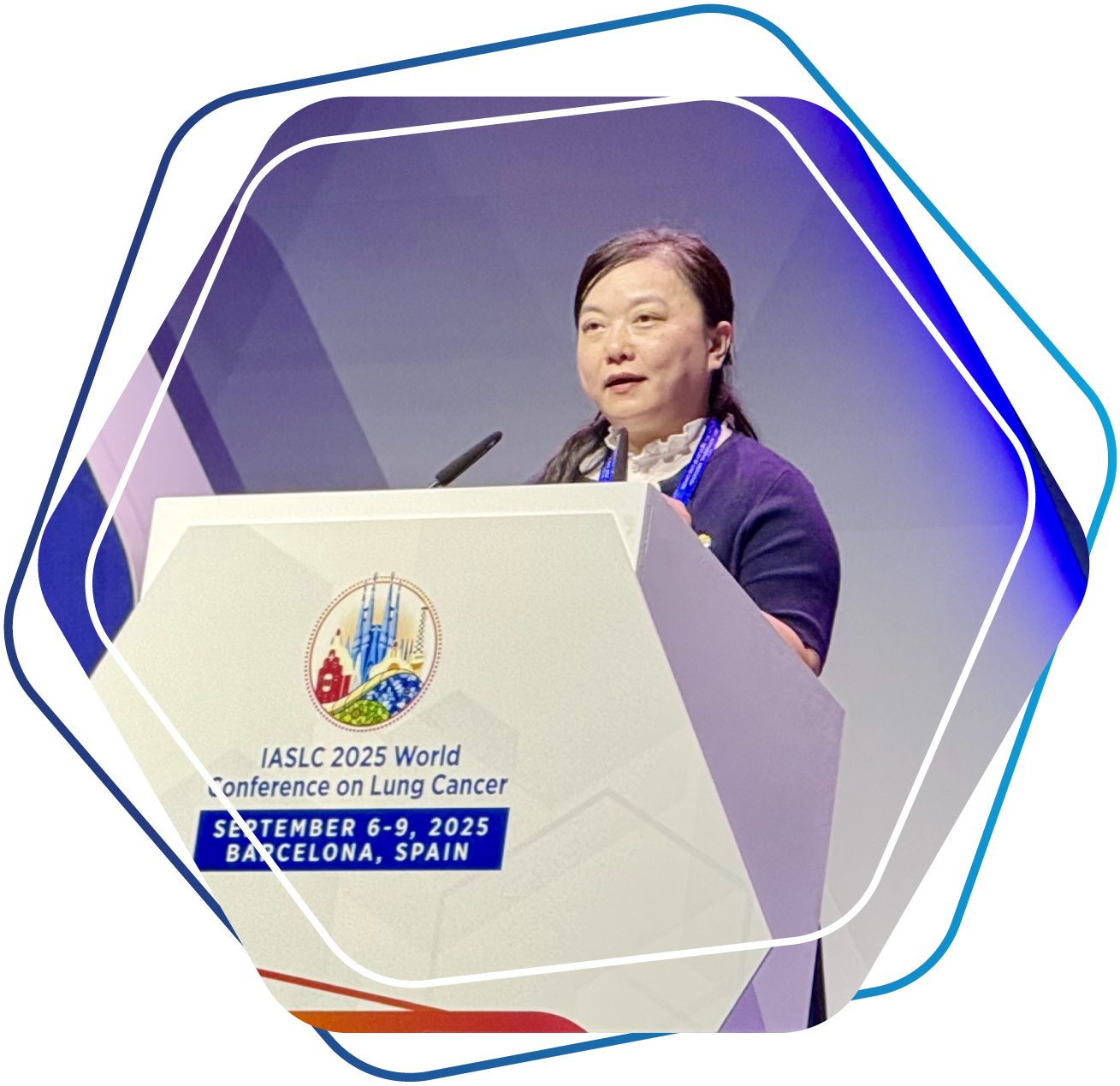
A recent study, presented by Nan Bi, MD, PhD, at the 2025 World Conference on Lung Cancer, evaluated circulating tumor DNA (ctDNA) as a predictive biomarker for consolidation immunotherapy.
Innovative Therapeutic Strategies and Molecular Insights in SCLC and Neuroendocrine Tumors
Registered WCLC 2025 attendees can watch Dr. Nan Bi and other experts present valuable insights in SCLC and therapeutic strategies with on-demand access to recorded sessions and slides. Watch Now
Study Background and Trial Design
The trial analyzed 490 plasma ctDNA samples from 144 patients with LS-SCLC, with 251 samples from the concurrent chemotherapy (CCRT)-only group and 239 samples from the consolidation ICI group (those who received CCRT followed by consolidation with serplulimab).
ctDNA was assessed at multiple time points, including:
- Baseline
- After two cycles of induction chemotherapy/before concurrent radiation
- Post-radiation therapy
- Surveillance during ICI consolidation
- Disease progression
The majority of patients were male (77.4%) with stage III disease at diagnosis (89.6%); most (66%) had a current or prior smoking history.
Key Findings
The most common mutations identified at baseline were TP53 (88%) and RB1 (76%). Notably, data revealed that ctDNA dynamics can predict survival outcomes in LS-SCLC.
Positive ctDNA pre-thoracic radiotherapy (t1) was a significant indicator of inferior progression-free survival (PFS). In this group, median PFS was 11.4 months in patients who were ctDNA-positive versus 49.4 months in those who were ctDNA-negative.
Positive ctDNA post-radiotherapy (t2) further predicted poor prognosis. The median PFS was 12.4 months for patients who were ctDNA-positive after concurrent chemoradiation versus 42.2 months for patients who were ctDNA-negative after concurrent chemoradiation, Dr. Bi indicated.
“We also found that patients who were ctDNA negative after two cycles of induction chemo had better PFS than those with ctDNA positivity,” Dr. Bi said.
The data also demonstrated that early ctDNA status could help identify patients who would benefit from consolidation ICI.
“If patients were ctDNA negative after two cycles of induction chemo, they did not benefit from consolidation ICI,” Dr. Bi said. “But, if patients had positive ctDNA after two cycles of induction chemo, they derived significant benefit from consolidation ICI.”
Building on these findings, Dr. Bi and colleagues developed athree-level prognostic model integrating early ctDNA status and radiologic tumor response to further refine prognosis.
[Slide here]

This is the first-of-its-kind study to explore the utility of ctDNA monitoring in patients receiving CCRT with or without consolidation ICI in LS-SCLC. The findings demonstrated that early detectable ctDNA could be a strong predictor of optimal ICI efficacy, with ctDNA negativity during consolidation ICI correlating with better prognosis.
Dr. Bi said in the era of immunotherapy, these findings offer valuable insights into personalized management of LS-SCLC treatment, and prospective data from ongoing studies could help advance the development of future studies.