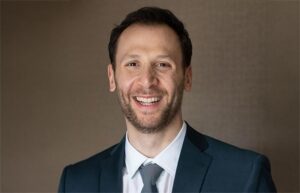






Established within the past two years, the IASLC Multidisciplinary Clinical Science Committee is one of the IASLC’s newer committees. However, it has already launched several key projects. Thomas “Tom” E. Stinchcombe, the Committee Chair, provided an overview of the committee’s projects and its overarching mission.

ILCN: For readers who may be unfamiliar, can you briefly share the mission and goals of the Multidisciplinary Clinical Science Committee?
Dr. Stinchcombe: What we hope to do is engage experts from across the globe to work on multidisciplinary research and educational projects.
We want to focus on issues that have a global scope, rather than a local or national scope, and need broad expertise. We want projects that can’t be done locally or through an institution that IASLC resources to really make them happen.
ILCN: What are the committee’s top priorities? Can you share any current or upcoming initiatives the committee is working on?
Dr. Stinchcombe: Shankar Siva, a radiation oncologist in Australia, received IASLC grant funding to assess the quality of systemic report staging and synoptic reporting of endobronchial ultrasound (EBUS). We’re very proud that our committee was funded.
Currently, with EBUS, each node station is reported independently. If you did the synoptic reporting, there are less errors because you don’t need to look through each of those, and it allows for quality control.
This would be a real advancement that fits our goals as a quality care initiative. It’s also something that could be implemented broadly since it doesn’t cost more money, and more importantly, it’s also likely to improve communication to the clinician who is treating the patient.
Martin Putora, a radiation oncologist in Switzerland, has the history and expertise in decision analysis. We’re looking at decision analysis for patients who received chemoimmunotherapy but did not proceed to surgical resections.
This involves collecting expert opinions to make decisions. The idea is that you identify areas of consensus and areas of discrepancy. With areas of consensus, there might not be level one evidence, but most agree this is logical reason to proceed.
Areas of discrepancy is where you should focus your next clinical trial, because it’s a sign that there’s equipoise in the field and that there’s an ongoing debate. We will use this for other scenarios where there’s a debate on what the optimal approach is.
We aim to define what multidisciplinary care is. The term is frequently used, but there can be regional differences, as well as resource differences. The classic image of multidisciplinary care is derived from the academic model, where all team members—the pathologist, pulmonologist, radiation oncologist, thoracic surgeon, and medical oncologist—sit around a table and discuss the case.
However, that’s not feasible in many rural areas. So how do you provide that level of care to those places? That’s what the focus of our efforts is.
Gender equity is one of the many areas of that we’re trying to address within all of society, but also within oncology. Cecilia Pompeo, along with William and Tina Cascone are implementing gender equity in lung cancer clinical trials from investigators and participants. There are other projects, but these are three or four that are most developed right now.
ILCN: How does the committee prioritize which clinical developments or emerging research to focus on?
Dr. Stinchcombe: We generally do a preliminary review to make sure it’s not redundant or overlaps with another project that’s going on in another IASLC committee.
We then look at the feasibility and make suggestions. The project will come back to the full committee to get feedback and get an impression of the feasibility, the enthusiasm, and how many centers are going to participate, or other aspects.
ILCN: How is the committee working to support education for researchers worldwide, especially in those low-resource settings?
Dr. Stinchcombe: I think it’s important to understand that even places like Europe and Canada have different health systems compared to the US. Every practice is different, and I think that’s important to consider. As a global organization, we must recognize that.
Much of what the multidisciplinary is trying to address involves providing multidisciplinary care in places where there may limited specialists. We’re working on that, along with tech reporting as an example of providing quality of care that’s also cost-efficient.
ILCN: Are there specific clinical needs, gaps, or trends in thoracic oncology that the committee is particularly well positioned to address?
Dr. Stinchcombe: We’re really trying to focus on the clinical care and the clinical questions that involve the integration of care, trying to improve access to care, and ensure that the quality of care is high across different countries and medical centers.
As we have such geographic and specialty variety, we have people working in different health systems, each with different perspectives. That’s really our strength.
ILCN: How do you envision this committee influencing IASLC’s broader mission?
Dr. Stinchcombe: Most of our projects focus on collaborative science, global education, promoting access and quality care. I think that’s important to IASLC’s broader mission.
I also think that we integrate well with efforts by the Rare Tumors Committee. The next big step for the committee is to discuss with the Global Multidisciplinary Practice Standards Committee so that, if we do the multidisciplinary project, we can integrate with their efforts to help on that front.
ILCN: What opportunities are available for IASLC members or other stakeholders to engage with or support the committee’s work?
Dr. Stinchcombe: We’re fortunate to have received numerous applications for participation in the Committee. Unfortunately, some qualified people didn’t have an opportunity to join.
I encourage others to apply next time. If you’re not on the committee but have an idea, you can reach out to us. It’s not meant to be a closed shop.
I encourage you to inquire to either a committee member or myself if you have projects or ideas while we’re building project-based teams, so that you’re part of a unique and individual project that the team’s working on. This is how we’ve structured it to date.
ILCN: What is your long-term vision for the committee’s role in shaping multidisciplinary care for thoracic cancers?
Dr. Stinchcombe: Importantly, the committee is only two years old, and we are still in a phase of rapid evolution and development. The good news is we’re still flexible in how we approach things.
I think the long-term goals would be to execute large projects with a global scope that rely on the expertise of the committee members and the support of the IASLC to address them.
We also hope that this provides opportunities for early-stage investigators to launch their projects and become integrated into the IASLC. This would assist in their career development, either through their projects or getting to know other people in the field.
ILCN: What do you hope readers will take away from the committee’s work? Is there anything else you’d like to share about the committee’s mission or future direction?
Dr. Stinchcombe: I hope the readers realize that this is a new committee, but we’ve launched several projects that address fundamental issues within the field.
We continue to focus on research projects while continuing to do our educational goals and other initiatives, such as case-based presentations. Our goal is to continue expanding these projects and integrate them with other committees so that we can have synergism.