





Delivering leading-edge knowledge worldwide to effectively prevent and combat thoracic cancers is a central pillar of the IASLC’s mission. Encompassed under this broader pillar are expanding accessibility and the value of available knowledge, broadening the educational offerings, and providing an accessible and enduring centralized learning repository.
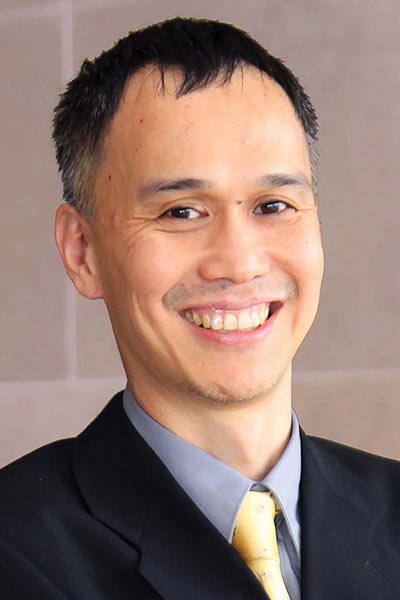
The IASLC’s Education Committee plays a critical role in planning, designing, and evaluating the association’s educational programming, ensuring that all activities meet the IASLC CME Mission and comply with the ACCME Accreditation Requirements. Ross Soo, PhD, MBBCh, Education Committee Chair, highlighted the importance of the committee’s role in supporting the IASLC’s mission, its responsibilities, and ongoing initiatives.
ILCN: For readers who may be unfamiliar, can you please share the mission and goals of the Education Committee?
Dr. Soo: The mission of the Education Committee is to develop and plan educational programs for healthcare professionals involved in thoracic oncology, consistent with the IASLC Strategic Plan and Educational Needs Assessments.
The goals are to assess the effectiveness of current programs, create new content, such as courses, webinars, and simulations, and ensure the educational activities align with the organization’s Continuing Medical Education (CME) mission and accreditation standards.
We also work with the other IASLC committees to assist them with instruction design and activity development.
ILCN: What are the committee’s top priorities? Are there any ongoing initiatives you’d like to highlight?
Dr. Soo: Our top priorities are to add educational content to our Learning Management System (LMS)—also known as Lung Cancer 360—by including case-based microlearning, courses, simulations, and the Highlights and “Best of” webinar series.
We conduct needs assessments to identify emerging educational requirements and prioritize areas for development. Furthermore, 2026 will be incredibly important as we have submitted for Accreditation Council for Continuing Medical Education (ACCME) re-accreditation.
Our ongoing activities include working with various IASLC committees on the MDT Case-based Simulations focusing on pathology, pulmonology, thoracic surgery, and radiation oncology, two Amazing Case Race Simulations, and the I-ELCAP/IASLC Radiology Self Assessment Activity.
ILCN: How do the committee’s responsibilities support the IASLC’s broader mission?
Dr. Soo: Education is central to the IASLC mission. As such, the committee supports the IASLC mission by disseminating knowledge at a global level, improving clinical knowledge, competence, and performance through CME activities, and providing relevant, impactful, and timely educational content by using needs assessments and outcome data.
ILCN: How does the committee ensure that the educational materials are relevant and aligned with the IASLC’s mission?
Dr. Soo: The IASLC Education Department follows ACCME planning standards to determine that the educational material is unbiased, balanced, and objective. The IASLC committees are asked to create 2-year plans, and each committee is asked to create two educational activities yearly. They can also work together to achieve this goal.
The Education Committee typically creates 30+ activities yearly. The 2-year plans are reviewed by Dr. Karen Kelly to ensure they align with the IASLC mission and strategic plan, and then approved by the Board of Directors (BOD).
ILCN: How does the committee evaluate and measure the effectiveness of the different educational programs?
Dr. Soo: We use many different evaluation methods, which are determined by the instructional design. Some of the methods are quizzes, pre- and post-tests, evaluations, and intra-activity polling. All data is evaluated yearly to ensure we reach our educational goals.
ILCN: How does the committee manage the integration and delivery of educational programs and activities across various formats to maximize reach and engagement?
Dr. Soo: The integration and delivery of educational programs are conducted through the Lung Cancer 360 LMS. This platform contains CME and non-CME multi-disciplinary educational resources such as conference materials, including slides, posters, and recordings, webinar recordings, podcasts, online courses, virtual simulations, microlearning modules, and patient advocacy resources.
ILCN: Are there any challenges in delivering educational programming to an international audience? If so, what steps does the committee take to overcome these challenges?
Dr. Soo: Key challenges include language barriers. As English is the standard language, the IASLC recognizes that many of its members are non-native English speakers.
Lung Cancer 360 has educational activities in various languages. For example, podcasts are held in different languages such as Dutch, Spanish, Korean, and Japanese, and some of the webinars are audio-translated in Chinese, French, German, Greek, Japanese, and Spanish. The Education Committee is piloting artificial intelligence (AI) to translate audio content into various languages.
Another challenge is ensuring the IASLC educational activities are recognized by different national and local governing medical bodies throughout the world. In fact, the Education Committee has a special projects workgroup that is responsible for exploring international accreditation options and determining which IASLC educational activities are suitable for accreditation beyond the US.
ILCN: Is there anything else about the committee or its work that you would like to share with readers?
Dr. Soo: The Education Committee plays a central role in the IASLC in delivering leading-edge knowledge worldwide. The Education Committee is highly collaborative with other committees of the IASLC to produce educational material.
I am greatly privileged to work with committee members and staff liaisons (superbly led by Kelly Nevins) who are incredibly talented, highly motivated, dynamic, and enthusiastic people. If any of the readers are interested in joining the Education Committee, you are most welcome to apply for the next cycle in 2027. Also, please check out Lung Cancer 360.