

Lung squamous cell carcinoma (LUSC) accounts for about 30% of all lung cancers worldwide and is associated with poor prognosis and limited therapeutic options, due in part to the lack of distinct, readily actionable genomic drivers. Histopathologic features and tumor grading inform management of other lung cancer subtypes, but a standardized and reproducible histologic grading system for LUSC was not available until recently.
In 2025, the IASLC Pathology Committee set forth a novel two-tier grading system for resected LUSC based on tumor budding alone.
The IASLC grading system was developed by assessing the prognostic value of histologic features, including tumor budding, smallest tumor nest size, size of the nucleus, and tumor spread through air spaces (STAS), in two training datasets of LUSCs resected without neoadjuvant therapy. Of the features considered, only tumor budding was independently prognostic of both relapse-free survival (RFS) and overall survival (OS) in both datasets.
The two-tier IASLC tumor budding-based grading system was also validated in an independent test dataset, confirming the reproducibility of the prognostic value of tumor budding.
“Whether this grading system could predict benefit from adjuvant chemotherapy and the genomic features that underpin this (potential benefit) are not known,” said Tae Hee Hong, MD, PhD.
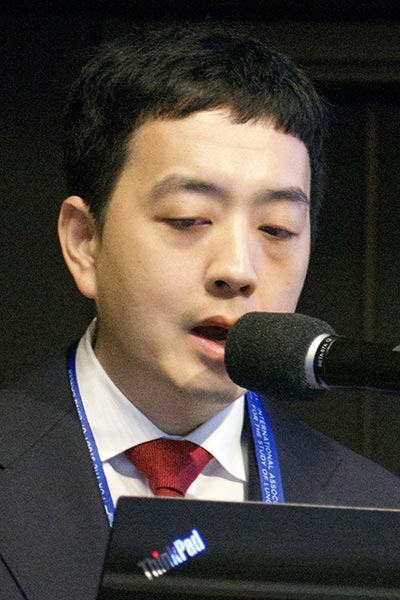
Dr. Hong, assistant professor in the Department of Thoracic and Cardiovascular Surgery at Yonsei University College of Medicine, Severance Hospital, in Seoul, Republic of Korea, presented the results of a retrospective analysis of the association between the 2025 IASLC LUSC grading system and survival outcomes during the 2026 World Conference on Lung Cancer (WCLC).

Evolving Pathological Grading and Molecular Profiling for Lung Cancer Risk Stratification and Treatment
The 2025 IASLC Tumor Budding Grade Identifies High-Risk Patients and Predicts Adjuvant Chemotherapy Benefit in Resected Lung SqCC
Registered WCLC 2026 attendees can review all the expert insights and key takeaways from the 9th Edition now via the online meeting platform. WATCH NOW
Dr. Hong and colleagues sought to validate the 2025 IASLC grading system in a contemporary, real-world surgical cohort, examine the association between IASLC grade and adjuvant chemotherapy outcomes, and explore the genomic features associated with high- and low-grade tumors.
In a retrospective cohort of 585 consecutive patients who underwent upfront LUSC resection, two independent pathologists counted tumor budding and graded tumors per the IASLC system, with high-grade tumors defined as having at least 10 buds/0.785 mm2.
Kaplan-Meier and multivariable Cox regression analyses were used to query the association between IASLC grade and survival outcomes. Subgroup analyses were also conducted, focused on the benefit of adjuvant chemotherapy in patients with pathologic stage IB–III LUSC.
Of the 585 patients, 520 had low-grade tumors, with high-grade tumors more often occurring in patients with advanced-stage disease and in recipients of adjuvant chemotherapy.
“As expected, high-grade tumors had significantly worse disease-free survival (DFS) and OS,” Dr. Hong said. The hazard ratio was 1.84 for DFS and 1.88 for OS.
High tumor grade remained independently prognostic of worse outcomes in multivariable models, with a stronger prognostic impact than STAS.
In patients with stage IB–III LUSC, adjuvant chemotherapy was not associated with better DFS in the overall cohort. The DFS outcomes in the low-grade tumor subgroup did not differ by receipt of adjuvant chemotherapy.
However, there was a numerical trend toward better OS in patients with high-grade tumors who received adjuvant chemotherapy, with a hazard ratio of 0.52 for the OS comparison between those who did versus those who did not receive adjuvant chemotherapy; the 95% confidence interval was 0.26 to 1.06, with a p value of 0.066.
As the signal for improved OS benefit with adjuvant chemotherapy in patients with high-grade tumors did not reach statistical significance, these data are hypothesis-generating, Dr. Hong noted.
The exploratory genomic profiling showed that PIK3CA missense mutations, including the E545K gain-of-function hotspot mutation that results in constitutive activation of the PIK/AKT/mTOR signaling pathway, occurred exclusively in low-grade tumors.
“In contrast, disruptive TP53 mutations increased across budding groups and were more frequent in high-grade tumors,” Dr. Hong said. “These exploratory findings suggest distinct biological programs may underlie the newly proposed [IASLC] grading system [for LUSCs].”
Dr. Hong said that the retrospective nature, single-center design, and limited statistical power to ascertain differences in the high-grade and genomic subgroup analyses were key study limitations, so prospective multicenter validation would be required.
“The IASLC tumor budding-based grading system independently stratified prognosis in this external cohort with resected LUSC. High-grade tumors showed a signal for [OS] benefit from adjuvant chemotherapy, which was absent in low-grade disease,” Dr. Hong said. “These findings extend the clinical and biological relevance of the recently proposed IASLC grading system.”