






For Jane Perlmutter, PhD, MBA, cancer survival is not a single chapter but a decades-long journey marked by six separate solid tumor diagnoses since the mid-1980s. Her diagnoses have included breast cancer (twice), squamous cell skin cancer, esophageal cancer, and non-small cell lung cancer (NSCLC), which she has faced at both stage I and stage IV.
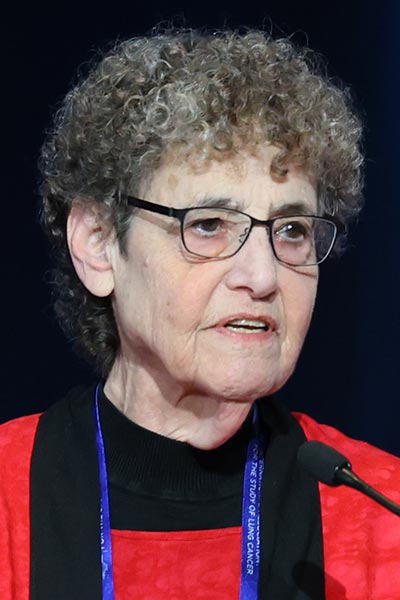
During a dedicated Patient Advocate Session at the 2026 Targeted Therapies of Lung Cancer (TTLC) conference in Huntington Beach, California, Perlmutter—whose cancer journey is as inspiring as her outlook on life—spoke about her experiences not only as a survivor but also as an advocate, working to ensure that the patient’s voice is meaningful and fully integrated into research.
“I’ve had a whole bunch of cancers… But I’m still here,” she said. “I’m doing great. I’m on treatment, and I have no side effects. I’m the luckiest cancer survivor there is.”
In 1985, when Dr. Perlmutter received her initial cancer diagnosis, formal patient advocacy did not yet exist. Other survivors helped her become involved in peer support at that time; however, she says it wasn’t until the 1990s that patient advocacy began to gain momentum, eventually earning recognition from the scientific community.
Today, research advocates play a wide range of roles, from reviewing research grants to helping translate and disseminate findings, as well as contributing to research policy and oversight. Perlmutter, now retired, dedicates much of her time to volunteer research advocacy efforts. One such initiative is called the Lung Cancer Citizen Scientist Program, which aims to train the next generation of advocates.
“I’m a person who always sees a silver lining. Advocacy is my silver lining,” she said. “But I do it because so many patients don’t have the luxury of patience.”
Dr. Perlmutter doesn’t only talk about the clinical research aspect of patient advocacy; she lives it. She has contributed to several innovative biomarker-driven platform trials, including I-SPY and TAPUR. The I-SPY trial, a response-adaptive phase II study involving patients with stage II and III breast cancer, assigns investigational agents based on tumor biomarkers. Meanwhile, TAPUR, a pragmatic trial led by the American Society of Clinical Oncology, evaluates FDA-approved targeted therapies used off-label in patients with advanced solid tumors.
In both settings, she emphasized the importance of incorporating the patient perspective into various aspects of research. In both the I-SPY and TAPUR trials, patient advocates were involved from the get-go in trial planning, working groups, co-authoring, peer support, and other roles.
Another area of interest that Dr. Perlmutter highlighted in her presentation was the impact of drug development, particularly the question of whether doses are optimized. While she acknowledged the benefits of the growing number of available therapies, she also pointed to potential downsides, including overtreatment and the cumulative effect of ongoing low-grade toxicities on quality of life. To address this question, she intends to fully commit to finding answers through research focused on individualized, optimized dosing.
Dr. Perlmutter concluded her lecture by reinforcing the central message of her advocacy work: meaningful patient involvement must be built into research. Drawing on decades of lived experience and years of participation in clinical research, she urged investigators to partner with patients not as observers, but as collaborators.
Her message reflects a growing recognition that the future of cancer research depends not only on scientific innovation but also on partnership with the patients it aims to serve. “I hope you will involve advocates early and often in all of your work,” she said.