




-
Interim NADIM ADJUVANT Data Suggest Adjuvant Chemo-IO May Reduce Recurrence Risk in Patients Following Complete Resection
-
Final FLAURA2 OS Data Show Osimertinib Plus Chemo Offers Benefit Compared with Monotherapy
-
Potential Impact of GLP1-RAs on TKI-induced Weight Gain in Patients with NSCLC
-
No “Known” Risk Factors: The Health Consequences of Radiation Therapy
-
Discussion Covered Updates, Strategies, and Controversies in Lung Cancer Staging
-
No PFS, OS Benefit Seen in Final Results from PACIFIC-2
-
WCLC Attendees Hear Preview of Proposed Changes for the 9th Edition of the TNM Staging Classification for Thoracic Cancers
-
Treatment of Immunotherapy-Related Dermatologic Toxicities: An Interview with Dr. Mario Lacouture
-
A Holistic Approach to Patient Care
Sign up for news updates
Radiation Oncology
-

Patient Perspectives on CT and PET Scans: Imaging Technology Provides Different Benefits, Drawbacks for Each Individual Patient
For patients with metastatic lung cancer, frequent scans are a stark reality of living with cancer. Although most scans happen every 3 months, some clinical trials require scans more often as part of the trial’s protocol. As patients, we obviously want to know what is happening with our cancer and when to adjust our treatment…
-

FDG PET–CT Versus CT for Lung Cancer Surveillance: The "Con" Side
Lung cancer remains the leading cause of cancer-related deaths.1 Advances in early detection of lung cancer following the implementation of screening programs and the availability of newer therapies have increased the number of patients treated with curative intent. Proportionally, lung cancer surveillance after curative therapy is also growing. It is imperative now more than ever…
-

SBRT Versus Surgery in the COVID-19 Era: What Has Changed and What Hasn't?
Surgery is considered the preferred treatment in patients with lung cancer who are fit to undergo the procedure. Stereotactic radiotherapy (SBRT) is guideline recommended for patients who are unfit for surgery or who decline to undergo the procedure. The ongoing debate about the role of SBRT in fit patients reflects the absence of data from…
-

Questions Remain Following Long-Term Results of the Phase II SABR-COMET Trial
In Response To: Palma DA, Olson R, Harrow, S, et al. Stereotactic Ablative Radiotherapy for the Comprehensive Treatment of Oligometastatic Cancers: Long-Term Results of the SABR-COMET Phase II Randomized Trial. J Clin Oncol. 2020;38(25):2830-2838. In the SABR-COMET trial,1 random assignment was used to study the effects of ablative therapy in comparison to palliative radiotherapy. However,…
-

The Immune System: A New Organ at Risk in Lung Cancer Radiation Therapy?
IN REFERENCE TO: Ladbury CJ, Rusthoven CG, Camidge DR, Kavanagh BD, Nath SK. Impact of radiation dose to the host immune system on tumor control and survival for stage III non–small cell lung cancer treated with definitive radiation therapy. Int J Radiat Oncol Biol Phys. 2019;105(2):346-355. The immune system plays critical roles in the pathogenesis,…
-

Understanding the Promising Role of Stereotactic Ablative Radiotherapy in Treating Patients With Oligometastatic Disease
The recently published long-term results of the SABR-COMET phase II trial have further invigorated treatment options for patients with oligometastatic cancer.1 The early results of the SABR-COMET trial published in April 2019 showed significant promise for stereotactic ablative radiotherapy (SABR) in treating oligometastatic disease, resulting in an OS and a PFS benefit.2 The long-term results…
-
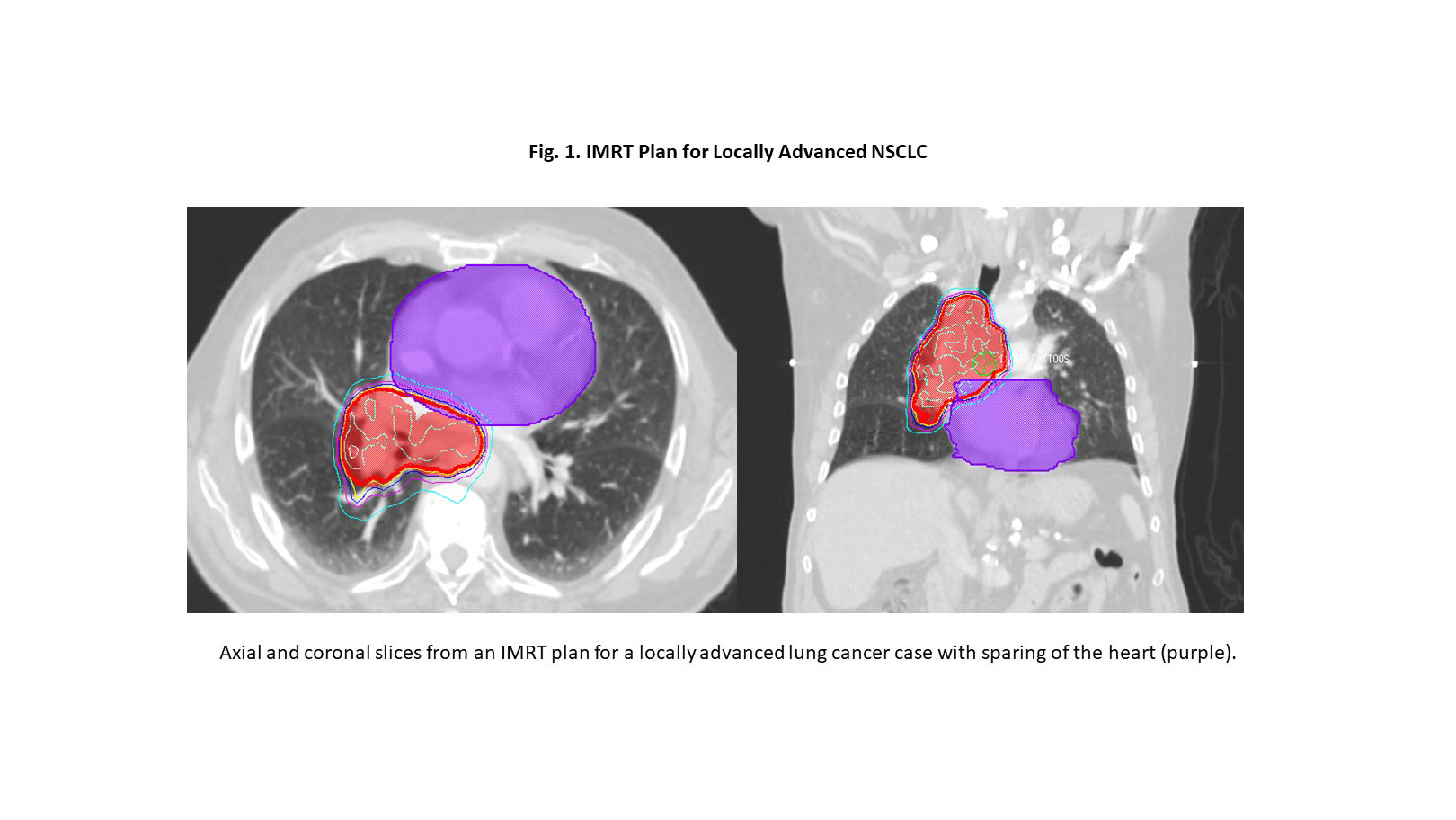
Cardiac Radiation Dose, Cardiac Events, and Survival in Locally Advanced NSCLC
Megan Daly The standard of care for fit patients with unresectable, locally advanced (LA-) NSCLC is concurrent chemoradiation (CRT) followed by consolidation durvalumab. However, thoracic radiation (RT) for lung cancer carries a substantial risk of toxicity. The risk of acute and subacute pulmonary toxicity has long been recognized, but cardiac injury was traditionally believed to…
-

Brain Metastases in NSCLC: Is Delaying Upfront Radiation a Viable Option?
By Arya Amini, MD, and Chad G. Rusthoven, MD Posted: August 19, 2020 Approximately 10% of patients diagnosed with metastatic NSCLC present with brain metastases, and another 30% develop brain metastases during the course of their illness.1 Traditionally, the treatment for brain metastases included surgery, whole-brain radiotherapy (WBRT), or stereotactic radiosurgery (SRS). Due to neurocognitive…
-

PCI Decreases the Risk of Brain Metastases in Patients with Locally Advanced NSCLC
By Elizabeth Gore, MD Posted: May 27, 2019 IN REFERENCE TO: De Ruysscher D, Dingemans AC, Praag J, et al. Prophylactic cranial irradiation versus observation in radically treated stage III non-small-cell lung cancer: A randomized phase III NVALT-11DLCRG-02 study. J Clin Oncol. 2018;36(23):2366-2377. Dr. De Ruysscher et al. are commended for completing a well-designed phase III…
-
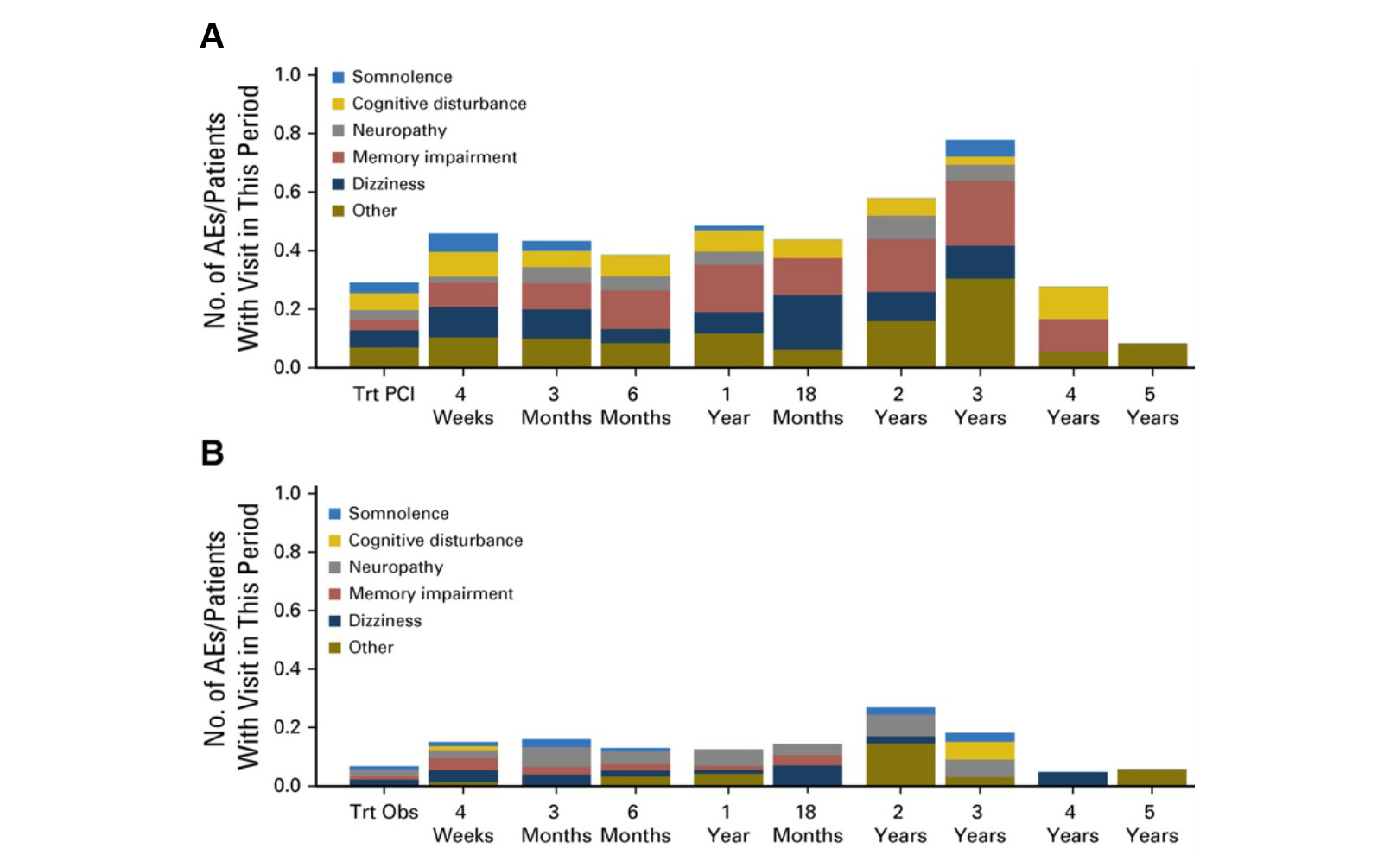
Prophylactic Cranial Irradiation in Locally Advanced NSCLC Falls Flat
By John Armstrong, MD, FRCPI, DABR, FFRRCSI Posted: December 2018 RTOG 0214, a phase III randomized trial, is the biggest trial to date testing prophylactic cranial irradiation (PCI) in locally advanced NSCLC.1 The trial, presented at the IASLC World Conference on Lung Cancer this past September, evaluated patients with stage III NSCLC whose disease had…
View ILCN Archives
Provider Resources
Popular Articles