






On Friday, February 20, a debate during the 2026 Targeted Therapies of Lung Cancer (TTLC) meeting sparked a spirit of competition rivaling that of the concurrent Winter Olympics. The central issue at hand: whether novel EGFR and HER2 exon 20 TKIs should be used as first-line therapy.

Making the Case for TKIs
Zosia Piotrowska, MD, MHS, argued in favor, citing the strong and durable efficacy, favorable safety profiles, and positive intracranial activity of HER2 tyrosine kinase inhibitors (TKIs). After noting that these TKIs have only been approved for use in the post-chemotherapy setting, she posed the question: What are the characteristics that have led to the successful adoption of first-line targeted therapy?
“I think we’ve seen that with drugs that have strong and durable efficacy, favorable safety profiles, and good intracranial activity,” Dr. Piotrowska said.
Beginning with the “low-hanging fruit,” Dr. Piotrowska argued that HER2 TKIs meet each of these criteria.
“These drugs are highly active, as we’ve seen,” she said. “We see high response rates and good progression-free survival (PFS) in the post-chemotherapy setting, along with intracranial responses with zongertinib. We haven’t seen as much data yet with sevabertinib, but these seem to be central nervous system-active therapies.”
This activity is even more impressive in that frontline setting, with response rates exceeding 70% and a median PFS not yet reached in the datasets that have been reviewed so far. Additionally, more than 50% of patients were progression‑free at 6 and 12 months, Dr. Piotrowska said.
Moving on to toxicities, she noted that these are generally well tolerated, even with sevabertinib, which has a grade 3 diarrhea rate of around 20% in the later‑line setting; however, this rate appears to be lower in the frontline cohort data that was presented.
With that, she initiated an Olympic-style matchup, pitting ongoing frontline studies of zongertinib and sevabertinib head‑to‑head against chemotherapy and immunotherapy, with PFS as the primary endpoint for frontline data. Which of these will take gold?
Citing historical data from the IPASS, LIBRETTO-431, and PROFILE 1014 studies, Dr. Piotrowska argued that these therapies have objective response rates (ORR) of 70% or higher, PFS of about 10 to 12 months with gefitinib and crizotinib, and even better outcomes with selpercatinib.
Presenting data from ongoing frontline studies comparing zipalertinib combined with chemotherapy, sunvozertinib, and furmonertinib to chemotherapy alone, she noted that zipalertinib, sunvozertinib, and furmonertinib all demonstrated improved safety profiles.
“We see very low rates of high‑grade diarrhea and rash with these agents, as well as lower rates of dose reductions, which was a big challenge with mobocertinib,” Dr. Piotrowska said. “Although we don’t have much frontline data yet, the results with furmonertinib are very promising—79% response rate in that small frontline cohort.”
Moving on to sequencing, she argued against reserving TKIs for a second‑line treatment. She said not only does it appear to be most effective in the frontline setting based on the data, looking at the activity after amivantamab and after T-DXd, one can see that these numbers significantly decline, with lower ORRs in the post‑T-DXd and post‑amivantamab settings.
“The observed efficacy and safety of these TKIs are truly on par with other targeted therapies that we routinely use as our frontline standard of care,” Dr. Piotrowska said. “Moreover, the fact that their efficacy drops substantially after amivantamab and ADCs further supports their frontline use.”
Sticking With Standard of Care
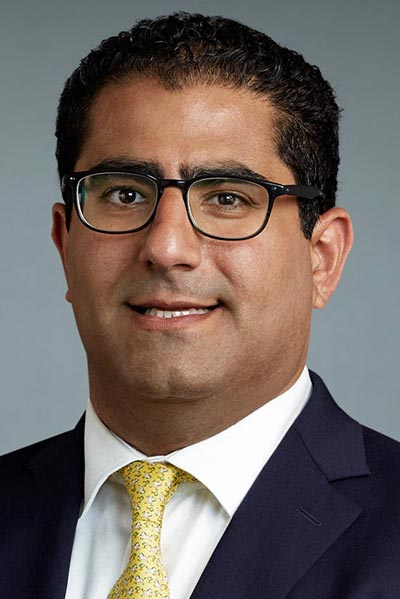
Joshua Sabari, MD, discussed the current standard of care for EGFR exon 20 mutations, highlighting the success of amivantamab plus chemotherapy.
“EGFR exon 20 insertions are quite heterogeneous,” Dr. Sabari said. “Over 200 different insertion mutations have been defined now, and we know that amivantamab plus chemotherapy is the only FDA‑approved standard of care in the frontline setting.”
Referencing the PAPILLON trial, he highlighted the success of amivantamab combined with chemotherapy.
“We all know the data: a 60% reduction in the risk of progression and death here with using the combination of amivantamab and chemotherapy,” Dr. Sabari said. “We don’t yet have full overall survival (OS) data, but despite crossover, we do see a trend toward positivity.”
Dr. Sabari then argued that, thus far, no novel agents in the frontline setting have outperformed the amivantamab-chemotherapy combination. Addressing the challenges of single-agent TKIs in the frontline setting, he referenced a negative study involving mobocertinib.
“Looking at a drug like mobocertinib, we were very excited about its use in the later‑line setting,” Dr. Sabari said. “However, when we moved it into the frontline setting, it failed versus chemotherapy.”
He emphasized the need for combination strategies to overcome resistance, spotlighting the challenges of HER2 exon 20 insertions. While amplification and overexpression are widely discussed, there are also non‑tyrosine‑kinase‑domain mutations, including extracellular domain mutations.
“If you look at chemotherapy and immunotherapy here, we’re seeing response rates of about 40%, and I think we’re going to be able to beat that very easily. However, when you consider drugs like zongertinib (77%) and sevabertinib (71%), maybe we should be combining them with chemotherapy or with trastuzumab deruxtecan,” Dr. Sabari said. “Maybe we need to move away from the idea of using a single‑agent novel TKI in the frontline setting.”
Dr. Sabari concluded by emphasizing that the field should focus more on combination strategies to overcome heterogeneity and resistance.
“We know that CNS response and durability are going to be very important. What about TP53 co‑alterations, or other high‑risk co‑alterations?” Dr. Sabari said. “We’ve learned from the EGFR‑activating space that combinations will, time and time again, outperform single‑agent TKIs.”
Both Dr. Piotrowska and Sabari entertained the audience with their compelling arguments, engaging slides, and charismatic banter. However, only one could take home the gold, and Dr. Piotrowska earned the top spot on the metaphorical podium, with the majority of the “judges” in the audience ruling in favor of first-line TKIs.