Established around two years ago, the Basic and Translational Science Committee is one of the newest groups to join the growing list of IASLC committees.

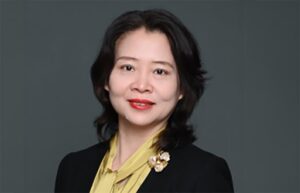
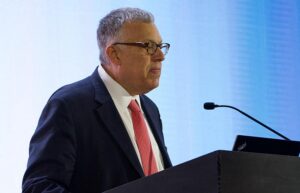
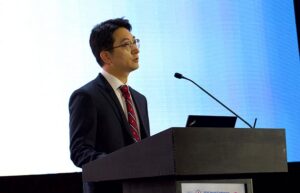
The committee includes a mix of oncologists and basic researchers. Tom John, MD, PhD, is the current chair of the committee through 2027. In addition to Dr. John, the committee leadership includes Jianjun Zhang, MD, PhD, who serves as Deputy Chair; Triparna Sen, PhD, who serves as Board Liaison; and Murry Wynes, PhD, who serves as Staff Liaison.
Among the committee’s core group, previous leaders also remain active within the discussions. This includes Celine Mascaux, MD, PhD, the former committee Chair, and Ming Sound Tsao, FRCPC, MD, the former Board Liaison.
Dr. John discussed the committee’s goals, objectives, and upcoming opportunities in a recent Q&A with ILCN.
ILCN: For readers who may be unfamiliar, what can you share about the committee’s mission and goals?
Dr. John: Our main goal is to bring investigators together to advance research into thoracic cancers, focusing on the basic science elements. While other committees concentrate on pathology or clinical elements, we focus on the basic science side.
ILCN: What would you describe as the committee’s top priorities, and are there any ongoing initiatives that you would like to highlight?
Dr. John: Lung cancer has become highly nuanced—there are so many different subsets that you can’t simply put into one basket. The very first project that we received IASLC funding for was to develop a database called VIKTOR for cell lines and patient-derived xenograft (PDX) models.
VIKTOR has a list of all the main cell lines with their specific genotype or mutations. We are incorporating a set of PDX models that have also been genotyped, bringing everything together into a virtual, interactive knowledge base.
The platform is live on the IASLC website. It was probably our biggest initiative over the last two years. One unique aspect of the VIKTOR database is that it will include cell lines that are not commercially available. We hope that including these fosters collaboration among researchers.
We have also written and published two review papers on various molecular methodologies used in translational science, with more coming. Additionally, we have hosted two Hot Topic in Basic and Translational Science meetings: one focused on resistance to targeted therapies cancer in the fall of 2024, and another on precancer and early-stage lung cancer in 2025.
ILCN: How do you see VIKTOR changing the day-to-day workflow of translational researchers? And what is the endgame or ultimate goal for its full release?
Dr. John: At the moment, the landscape is very fragmented. There are numerous cell line companies with their own databases, and sometimes the information is not completely accurate or doesn’t fit what you’re looking for.
We hope VIKTOR becomes the go-to platform for researchers in the lab setting. We are aiming to include cell lines created within laboratories globally. Additionally, we hope to expand its scope beyond non‑small cell lung cancer to include small cell lung cancer, mesothelioma, and other thoracic cancers.
An important aspect of VIKTOR is that it was created by thoracic researchers for thoracic researchers. We hope to capture what people are really looking for in these models.
Going forward, we are working to make the platform more user-friendly. There are currently some predefined searches, but we’re trying to get it to the point where users can enter exactly what they are looking for, and it will return the appropriate cell lines and information on how to obtain them.
We’re not there yet, but I can see us getting there quickly. Things are changing rapidly within the platform, and we really value people using it and providing feedback.
ILCN: Is there anything related to the upcoming IASLC 2026 Hot Topic in Basic and Translational Science Meeting: Resistance to Immunotherapy that you find particularly promising for overcoming current resistance challenges?
Dr. John: The Hot Topics meetings are really great from both basic and translational perspectives. You gain real insights into what researchers and leaders in the field are focusing on and see early data before it’s published, which keeps you up to date from a translational science standpoint.
We’re looking forward to the upcoming meeting in June, which I think will deliver something very similar to past meetings. We have invited leaders in the field of immunoresistance to share data that you would otherwise not see until it’s completed.
It’s a great meeting format, and people feel comfortable asking questions because it’s relatively small. These are questions we are all asking, not only as clinicians but also as researchers: What are the underlying mechanisms? How can we overcome them? How can we get more out of immunotherapy?
I highly encourage everyone to attend if they can.
ILCN: There are well-known barriers that exist in different countries and medical institutions regarding access to high‑cost equipment and sequencing technology. What initiatives is the committee championing to encourage research participation from low‑ and middle‑income countries (LMICs)?
Dr. John: That is something we have been looking into further. It is always a bit more challenging because, as you mentioned, access to various platforms and models differs.
You will notice that the committee includes significantly more representation this term from researchers in LMICs. This year, for example, we have representation from India. Additionally, more Asian countries are represented this time, including Korea, China, and Taiwan. There is also continued representation from the main centers we have had previously in the US and Europe.
We have actively sought to engage LMICs in Asia and South America. We hope that their input will help us drive meaningful change in those areas.
ILCN: What do you think is the single most important skill or mindset that the committee aims to instill in young, early-career investigators?
Dr. John: We recently submitted a proposal to the IASLC called BRIDGE IASLC: Basic Researchers Integrated for Development, Growth, and Engagement.
The idea is to bring more basic scientists and basic researchers into the IASLC fold through various mechanisms, such as dedicated workshops, interactive forums, and partnerships with other basic research organizations.
We also hope to develop targeted mentorship programs that involve integrating more basic scientists into IASLC activities, including guidance on grant development, publications, and translational positioning.
One of the goals we hope to accomplish through a mentoring program is to bring more basic scientists to the World Conference on Lung Cancer, the Hot Topics meetings, and other regional conferences by providing travel awards.
ILCN: Is there anything else that you would like to share with readers?
Dr. John: Because we’re a new committee, we are still in the process of establishing ourselves. We’re looking into developing working groups within the committee to focus on specific elements of basic research that are currently evolving.
As a young and enthusiastic committee, we have a lot of enthusiasm and opportunities to build and accomplish more in this space.
I think VIKTOR is an excellent example of how we’ve been able to develop a solution that addresses a well-known challenge in basic research. We are very grateful to the IASLC for awarding us that grant and really hope that it will become the go‑to platform for basic researchers going forward.