In today’s digital landscape, clinicians and researchers in thoracic oncology can access a wealth of information across countless online databases. However, with such abundance comes the challenge of carefully sifting through and interpreting vast amounts of data—knowledge that is essential to advancing cancer research, developing new therapies, and ultimately saving lives.
From Concept to Creation
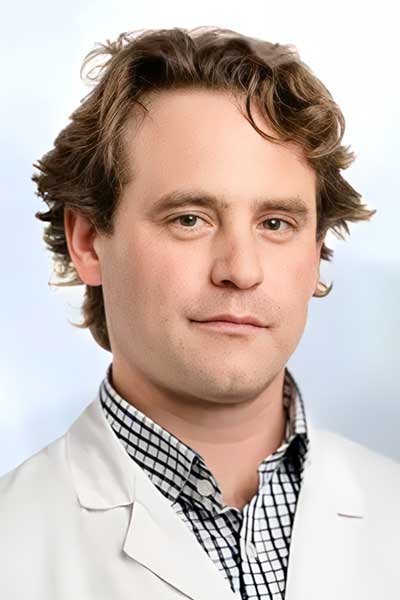
To help meet this challenge, the IASLC’s Basic and Translational Science Committee (BaTS), has developed the Virtual International Knowledgebase for Thoracic Oncology Research (VIKTOR)—a bioinformatics platform offering a unified collaborative ecosystem that identifies and redistributes available digital knowledge about preclinical models, starting with cell lines.
The initiative aligns the available digital resources with the priorities of the thoracic oncology community and the needs of the researchers through an easy-to-use query tool.
The idea for VIKTOR arose when the IASLC Board of Directors launched a grant opportunity to support Committee projects in late summer 2024. A group of BaTS members volunteered to work on the call constituting the first VIKTOR team. It was then that the idea of the platform was born and started to shape, permitting the team to win the competitive internal grant of the IASLC. “We officially began in January 2025,” Ferdinando Cerciello, MD, PhD, medical oncologist at the University Hospital of Bern, Switzerland, said. He is also the PI of the project, alongside Laila Roisman, PhD, from the Cancer Research Institute of the Samson Assuta University Hospital, Israel.
This has been an important first success for the BaTS committee that was just initiated end of 2023 and Pr Ming Tsao, MD, FRCPC, Pathologist-Scientist at the Princess Margaret Cancer Center in Toronto, first board liaison of the BaTS Committee and Pr Celine Mascaux, MD, PhD, head of pulmonology and thoracic oncology at Strasbourg University in France, who served as first chair of this committee, highly prioritized the development of this platform among the first 2 years objectives of the committee and strongly supported the work of the VIKTOR team.
“We are still optimizing and adapting to the community’s needs and have a larger technical plan ahead, guiding step-by-step releases as it progresses,” Dr. Cerciello, a key coordinator within the committee, said. “We announced the beta version launch in Barcelona [at the 2025 World Conference on Lung Cancer], marking an important milestone. It will be a stress test from which to learn while moving toward the full release of VIKTOR.”
Since the announcement, the beta version officially launched at the end of October, offering early users their first opportunity to explore the tool’s capabilities. This early release allows for feedback to improve functionality, usability, and data accuracy.
The tool is expected to serve as a catalyst for innovation in thoracic oncology research, with cell lines as its initial focus and an evolving roadmap for future data integration and expanded models.
A Diverse and Collaborative Team of Experts
The international core team includes approximately 10 BaTS committee scientists from diverse fields—including bioinformatics, oncology, basic sciences, and pathology. The team also receives direct support from IASLC staff members: Senior Advisor of Scientific Affairs, Murry Wynes, PhD; Data Analyst, Thalia Giraldo; Chief Operating Officer, Michael Hoehn; and Associate Director of Information Technology, Dan Lissek.
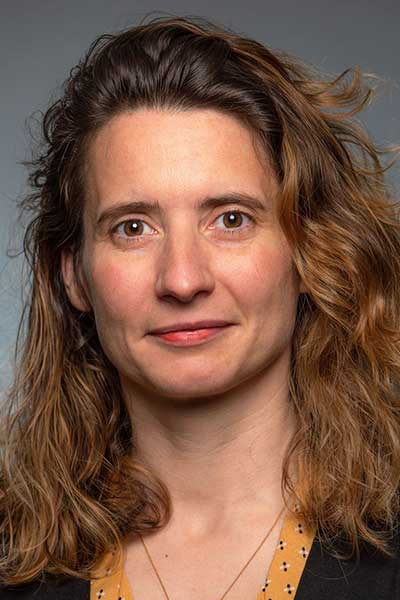
In addition, Tom John, MD, PhD, Professor of medical oncology at the Peter MacCallum Cancer Center in Australia, serves as the incoming chair of the BaTS committee.
Dr. John underlined VIKTOR’s potential to become “the knowledge platform to trust in thoracic oncology,” leveraging the unique expertise and collaboration of the leading scientists from the BaTS committee and the IASLC.
A Solution-Based Approach
Lydie Lane, PhD, group leader at the SIB Swiss Institute of Bioinformatics, is VIKTOR’s leading bioinformatician. She noted the importance of designing the tool with direct community input and how that drives solutions to various development challenges.
“For VIKTOR, the initial challenge is to simplify the tool and make it more intuitive for doctors who don’t have the time to learn an entirely new tool. They need something they can use in a minute and immediately understand how it functions,” Dr. Lane said.
“To do this, we need the input of the researchers and the clinicians—we interact with them through questionnaires to understand how they would like to use the tool,” she added.

Fabrizio Bianchi, PhD, head of the Cancer Biomarkers Unit at the IRCCS Casa Sollievo della Sofferenza Foundation, Italy, and a contributor to VIKTOR, spoke on his experience building an interface to solve a complex technical problem amid abundant knowledge databases.
“As we continue to develop VIKTOR, a big challenge has been how to harmonize these different data resources from different fields in a way that can be integrated,” Dr. Bianchi said. “The goal is to allow people from different specialties, like cancer research, to easily access this collective knowledge and expedite the identification of therapeutic targets. This is not about inventing something new, but [rather] taking the existing knowledge and making it accessible to everyone.”
Professor Jianjun Jay Zhang, a thoracic oncologist at the University of Texas MD Anderson Cancer Center and deputy chair of the BaTS committee, highlighted VIKTOR’s growing role in fostering collaboration and interconnection across the IASLC community. The platform, he noted, allows members to share preclinical cancer models and distribute expertise across disciplines.
The Future of VIKTOR
Triparna Sen, PhD, a Professor at The Ohio State University, an IASLC board member, and the new liaison for the BaTS committee, added that thanks to the active contribution of the committee’s expert scientists, VIKTOR has the capability to adapt to the fast-evolving landscape of translational research in thoracic oncology, where different models and information might be needed as novel biological questions appear.
As the committee of experts discusses VIKTOR’s ongoing development in biweekly meetings, reflecting on its progress and future direction, the drive behind this project clearly extends far beyond building a database. Its sights are set on making a tangible difference in advancing thoracic oncology research.
“The platform is very much dedicated to the researchers for their work with preclinical cancer models, but it would be really exciting to see VIKTOR developing to the point of generating knowledge by itself,” Dr. Cerciello said. “So, we will have a resource that not only supports specific questions about cancer models, but also, based on the intrinsic biological data of these models, might offer a source to lead to new ideas and hypotheses. Becoming a knowledge platform—and learning how to curate that platform for the community—that would be my dream, to start creating knowledge.”