





With nearly 2.5 million new cases of lung cancer reported in 2022,1 the disease is unquestionably a global issue. Yet, it is often underprioritized in many countries regarding policies and investments related to understanding risk factors, expanding screening, and improving access to comprehensive care.
The IASLC Global Policy and Partnerships Committee unites experts from across disciplines and regions to develop and advocate for evidence-based policy recommendations aimed at improving prevention, early detection, diagnosis, treatment, and survivorship for lung and other thoracic malignancies.
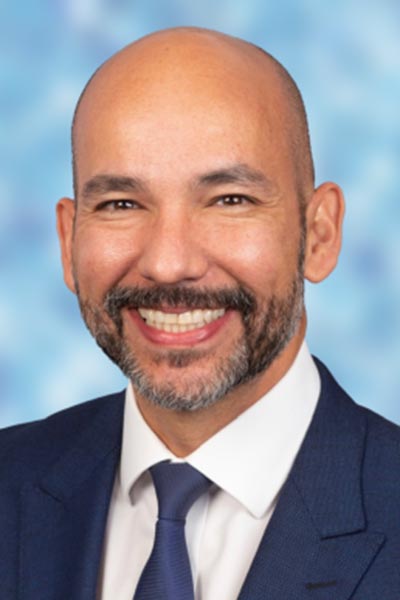
Gilberto de Lima Lopes Junior, MD, MBA, FASCO, Chair of the Policy and Partnerships Committee, outlines the committee’s responsibilities and the strategies being employed to address the current global challenges facing the field of lung cancer.
Professor of Clinical Medicine
ILCN: For readers who may be unfamiliar, could you please share the mission of the Global Policy and Partnerships Committee?
Dr. Lopes: The Global Policy and Partnerships Committee exists to help conquer thoracic cancers worldwide through policy change. Our mission is to shape a global agenda that prioritizes robust, data-driven policies across the lung cancer continuum, equitable access to high-quality care—especially in low- and middle-income countries and underserved communities—and measurable improvements in outcomes and quality of life for people affected by thoracic cancers.
In practical terms, this means analyzing evidence, identifying gaps and opportunities in national and global policies, engaging stakeholders from government officials to patient advocates, and translating science into concrete, implementable policy actions.
Our first major output, “Transforming lung cancer care: How effective policy can improve outcomes,” is a good example of this mission in action.
ILCN: What are the committee’s top priorities? Are there any ongoing initiatives you’d like to highlight?
Dr. Lopes: A core priority now is working with partners to drive the implementation of our Global Lung Cancer Policy recommendations and move these recommendations from paper into national and regional policies.
The new landmark World Health Assembly (WHA) lung health resolution on integrated lung health explicitly includes lung cancer and calls for stronger national strategies, cleaner air, tobacco control, and better access to affordable diagnostics and care for the first time.
Another major focus for us is leveraging this landmark resolutionto ensure that lung cancer is fully reflected when countries translate this resolution into their national plans, as well as building and amplifying global partnerships and knowledge platforms.
In addition to our IASLC Global Lung Cancer Policy Report, developed in collaboration with The Health Policy Partnership, we launched the podcast series “Lung Cancer Without Borders: Global Policies, Partnerships, and Progress” to explore how policy can drive change in areas such as tobacco control, screening, and access to innovation across different regions.
We are also hosting a global, multidisciplinary tumor board-style webinar on the lung cancer patient journey across diverse health systems, which uses real-world cases to surface policy gaps and solutions.
Together, these initiatives are designed to create a feedback loop that turns evidence into policy recommendations and country experiences, resulting in updated guidance.
ILCN: How do the committee’s responsibilities support the IASLC’s mission?
Dr. Lopes: IASLC’s mission is to eradicate all forms of lung cancer by advancing research, education, and care through global collaboration. The Global Policy and Partnerships Committee acts as the policy and systems arm of that mission.
We help ensure that IASLC’s scientific and educational outputs change policies, budgets, and service delivery on the ground. Our responsibilities include:
- Translating cutting-edge science and clinical practice into clear, actionable policy recommendations, with a strong focus on equity and health-system realities.
- Collaborating with professional societies, governments, multilateral agencies, patient advocacy groups, and research organizations to align efforts and avoid fragmentation.
- Bringing the IASLC’s evidence and perspectives into global discussions—such as those around the WHA lung health resolution—and providing tools that help policymakers and clinicians act on that evidence.
- Monitoring how recommendations are used, updating them as the scientific and policy landscape evolves, and incorporating those lessons into IASLC’s broader strategic plan.
ILCN: What are the greatest policy challenges currently facing lung cancer care globally, and how is the committee addressing them?
Dr. Lopes: Several interlinked challenges stand out: under-prioritization and stigma, insufficient risk-factor control, late diagnosis and limited early detection, inequitable access to comprehensive care, and survivorship and financial toxicity.
Our committee is addressing these challenges by:
- Providing a global baseline of policy gaps and opportunities through our report.
- Aligning lung cancer priorities with the new WHA lung health resolution and helping partners use this resolution as leverage for national change.
- Showcasing implementable case studies—from tobacco taxation and household air pollution policies to national LDCT programs and survivorship programs—to demonstrate that change is possible even in constrained settings.
- Amplifying the voices of patients and caregivers to ensure stigma and lived experiences are central to policy design—not an afterthought.
ILCN: How does the committee leverage strategic local partnerships to inform and implement global policy changes?
Dr. Lopes: Our entire model is built around co-production with local partners. We don’t want a “Geneva” or “Denver-down” approach to policy. Concretely, we:
- Co-create evidence with experts, ensuring our recommendations reflect real constraints and opportunities—from township-level awareness campaigns in South Africa to mobile CT screening in Northeast Brazil.
- Work through existing national and regional networks to adapt recommendations to local legal, financial, and cultural contexts, and support advocates who are negotiating national guidelines, cancer plans, and reimbursement decisions.
- Bringlocal policy innovations into global conversations through IASLC meetings, webinars, and the new podcast series, so they can be adapted elsewhere.
- Align with multilateral processes toensure that lessons from local partnerships inform global norms and that global commitments support local policy entrepreneurs.
ILCN: What strategies is the committee employing to promote equitable access to high-quality care and to address global healthcare disparities?
Dr. Lopes: Equity is explicitly embedded in our policy recommendations. Some of the key strategies we emphasize are:
- Risk reduction with an equity lens
- Resource-appropriate early detection
- Standardized care pathways plus navigation
- Improving access to diagnostics and therapies
- Supporting survivorship and social protection
- Harnessing digital tools thoughtfully
Our role is to articulate these strategies, provide real-world examples, and work with partners to adapt these to local realities.
ILCN: Is there anything else you would like to share?
Dr. Lopes: We are intentionally multidisciplinary and inclusive. The committee comprises clinicians, researchers, policy experts, and patient advocates from every region, including survivor representatives. This diversity is essential to keeping our work grounded in both science and lived experience.
Our outputs are intended to be tools, not static reports.We see the Global Lung Cancer Policy Report, the podcast series, webinars, and future position statements as living resources that countries can use when revising cancer plans, designing screening programs, negotiating reimbursement, or shaping broader lung-health strategies.
We are committed to continuous learning.As new data emerge, we will revisit and refine our recommendations, and we welcome feedback from IASLC members and partners who are testing these ideas in practice.
Ultimately, the committee’s goal is straightforward: to ensure that every scientific advance in thoracic oncology is matched by equivalent progress in policy, financing, and delivery—so that people can benefit wherever they live.
References