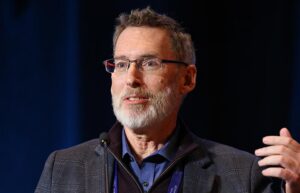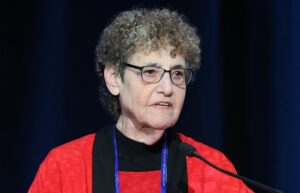






The 2026 Targeted Therapies of Lung Cancer (TTLC) conference gathered leading researchers, clinicians, and industry experts to discuss the latest advancements in targeted therapies for thoracic malignancies.
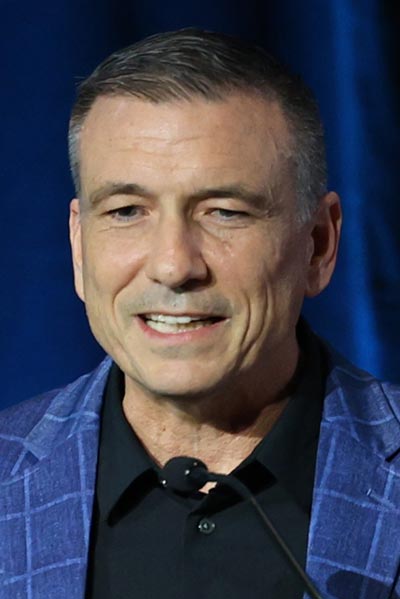
Held in Held in Huntington Beach, California, the event featured over 200 invited faculty members and included key sessions such as an Early-Career Round Table, a Women in Thoracic Oncology session, and a special guest presentation by Dr. D. Ross Camidge.
Drawing parallels between his work in thoracic oncology and “Mission Impossible,” Karen Reckamp, MD, TTLC Conference Co-Chair, introduced the Opening Keynote speaker, John V. Heymach, MD, PhD. His mission: operating under high-stakes pressure to prevent tumor progression and save lives.
Dr. Heymach, Chair of Thoracic and Head and Neck Medical Oncology at the University of Texas MD Anderson Cancer Center, took the stage to share his presentation titled “Beyond Driver Oncogenes: Disentangling Heterogeneity to Accelerate Personalized Lung Cancer Treatment.”
He began with a question for the audience: Are there ways we can accelerate what we’re doing? Do we have to continue at the current pace, or can we be more innovative, more agile, and adapt to all the tools that are emerging nowadays?
Understanding Heterogeneity
The key to personalizing therapy begins with heterogeneity. Heterogeneity occurs at multiple levels: among different patients, between different tumors, and within a single tumor. To understand personalized therapies requires researchers to disentangle heterogeneity.
“What we’re trying to do here is disentangle heterogeneity by sorting people into distinct groups. The first step is to have a reproducible, robust way to separate groups of people,” Dr. Heymach said. “Then, we need those groups to be associated with different degrees of benefit from different therapies. If we say our goal is to personalize therapies, this is the endgame.”
While lung cancer therapies are largely tailored based on driver oncogenes, Dr. Heymach pointed out that there is also heterogeneity within a given oncogene. For example, in the case of EGFR and HER2, there are more than 100 different activating mutations.
“Personalizing lung cancer therapies requires us to understand the heterogeneity and drivers for each particular disease setting where we have therapies,” Dr. Heymach said. “This will require understanding the role of tumor suppressors like p53, STK11, KEAP1, CDKN2A, and so forth.”
Classification of Atypical EGFR Mutations
Dr. Heymach discussed the classification of atypical EGFR mutations, emphasizing that although there are over 100 recurrent mutations, most don’t have explicit drug approvals. Highlighting the limitations of exon-based classification, Dr. Heymach introduced the audience to the concept of structure-function classification.
This approach organizes mutations based on their location within the kinase domain and the effects on drug binding. He and his team found that structure- and function-based clustering better predicts TKI sensitivity than standard exon-based strategies.
“This requires going beyond just the information provided by a Next-Generation Sequencing (NGS) report,” Dr. Heymach said. “NGS will tell you the exon and the gene, but we really need to be thinking more deeply if we want to improve and accelerate at matching drugs.”
Targeting Exon 20 and HER2
Dr. Heymach addressed the challenge of treating EGFR exon 20 mutations, which exhibit variable responses to treatment. By examining the structure of the binding pockets, he explained that targeting specific locations within the exon 20 loop region could help identify more effective therapies.
“There was significant variation: the further you progressed in the loop, the less effective some drugs became,” Dr. Heymach said. “Now, even within this region, we can consider personalizing treatments.”
Regarding HER2 mutations, Dr. Heymach noted that these occur in more than 20 different tumor types and are distinct from amplifications. Because HER2 insertions, EGFR insertions, and EGFR wild‑type have similar binding pockets, inhibiting the wild‑type EGFR can cause significant toxicities.
Dr. Heymach noted that there are multiple structurally distinct TKIs with different mechanisms of drug resistance for HER2 mutations, facilitating rational sequencing. He emphasized the importance of understanding these resistance mutations, as they provide structural insights into how a specific agent fits within the binding pockets.
“Once we identify these, we can ask: if this causes resistance to one drug, do other drugs work for this as well? By doing this, we can start organizing mutants, structures, and drugs to match those more effectively,” he said.
Tailoring Therapy for KRAS and SCLC
For KRAS, Dr. Heymach emphasized that tumor heterogeneity is often driven by co-occurring mutations, such as STK11/LKB1 and KEAP1, rather than by the KRAS mutation itself. These co-mutations can cause tumors to be resistant to immunotherapy and are associated with inferior responses to PD-1 inhibitors. Since these co-mutations highlight specific therapeutic vulnerabilities, they may reveal effective combinations for overcoming resistance.
Dr. Heymach also highlighted several challenges in tailoring therapy for small cell lung cancer (SCLC), where mutations are typically considered not targetable. However, emerging data have revealed four unique transcriptional subtypes that demonstrate distinct treatment responses. Differential expression of these signatures may be helpful in identifying effective, subtype-specific therapies for SCLC, Dr. Heymach noted.
AI for Personalizing Lung Cancer Therapy
Moving forward, Dr. Heymach’s team is investing in artificial intelligence (AI)-driven approaches for predicting drug response. He highlighted the potential of AI in oncology, especially for identifying who is likely to benefit from immunotherapy versus chemoimmunotherapy. He also addressed potential challenges with AI, such as the “black-box problem,” where the rationale behind the classification is unclear.
“We’re working on ‘clear‑box’ approaches that provide insight into how the model arrives at its output. This is a very different approach to personalization, where we may or may not understand the underlying processes but rely on large datasets to sort things out,” Dr. Heymach said. “This presents a real challenge for the field. To what extent will we implement these large models, and how can they complement molecular understanding driving resistance?”
One Size Does Not Fit All
Dr. Heymach concluded by emphasizing that there is no one-size-fits-all approach to tailoring lung cancer therapy, and multiple strategies will likely be necessary to expedite progress.
“Moving forward, this requires cooperative efforts, while also utilizing and sharing data in new ways. The IASLC and everyone in this room are well-positioned to be key players in accelerating progress toward personalized therapy,” Dr. Heymach said.