




-
Interim NADIM ADJUVANT Data Suggest Adjuvant Chemo-IO May Reduce Recurrence Risk in Patients Following Complete Resection
-
Final FLAURA2 OS Data Show Osimertinib Plus Chemo Offers Benefit Compared with Monotherapy
-
Potential Impact of GLP1-RAs on TKI-induced Weight Gain in Patients with NSCLC
-
No “Known” Risk Factors: The Health Consequences of Radiation Therapy
-
Discussion Covered Updates, Strategies, and Controversies in Lung Cancer Staging
-
No PFS, OS Benefit Seen in Final Results from PACIFIC-2
-
WCLC Attendees Hear Preview of Proposed Changes for the 9th Edition of the TNM Staging Classification for Thoracic Cancers
-
Treatment of Immunotherapy-Related Dermatologic Toxicities: An Interview with Dr. Mario Lacouture
-
A Holistic Approach to Patient Care
Sign up for news updates
Meeting News
-

Adoption of VATS Continues to Vary Globally
Surgical resection remains the gold standard for patients diagnosed with early-stage lung cancer, and since the early 1990s, video-assisted thoracoscopic surgery (VATS) lobectomy has been acknowledged as an effective – and preferred — minimally invasive approach for lung cancer surgery. However, VATS requires specialized training and equipment meaning adoption of this technique has not been…
-

Surgical Outcomes of CheckMate816 Support Use of Neoadjuvant Nivolumab Plus Chemotherapy for NSCLC
Patients treated with neoadjuvant combination nivolumab plus chemotherapy who had resectable NSCLC underwent surgical resection at similar rates and timeframes to those undergoing neoadjuvant chemotherapy, according to a presentation of surgical outcomes data from the CheckMate 816 trial (Abstract 8503). Data previously presented at the AACR 2021 Annual Meeting showed that nivolumab plus chemotherapy resulted…
-
VIOLET Data Establishes VATS as Standard for Early-Stage Resectable NSCLC
A presentation of updated results from the VIOLET study comparing video-assisted thoracoscopic surgery (VATS) with open lobectomy showed that improvements in pain, in-hospital complications, and shorter hospital stay previously reported after VATS were achieved without any compromise to oncologic outcomes at 1 year. In addition, patients who underwent VATS had significantly improved physical function at…
-
High-Dose Once-Daily Thoracic Radiotherapy Did Not Improve OS in Limited Stage SCLC
High-dose 70 Gy once-daily thoracic radiotherapy did not significantly improve OS compared with the current standard of 45 Gy twice-daily radiotherapy in patients with limited-stage SCLC, according to results of the CALGB 30610 (Alliance)/RTOG 0538 trial. “Outcomes in the 70 Gy cohort do provide the best evidence available in support of high-dose once-daily thoracic radiotherapy…
-
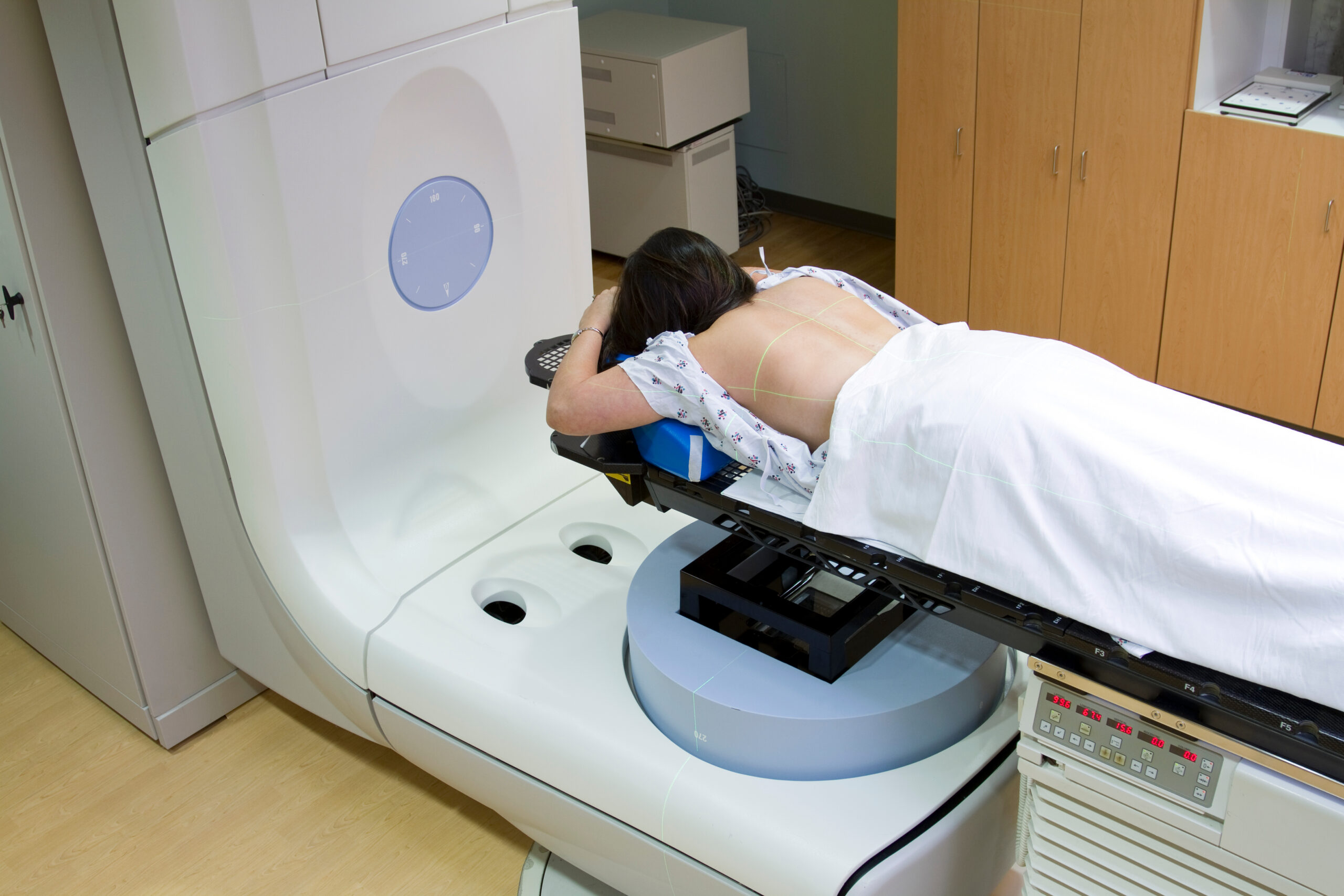
Single Institution’s Experience: SABR Shows Outstanding OS vs. VATS in Patients with Early-Stage NSCLC
Treatment of operable, stage-I NSCLC with stereotactic ablative radiotherapy (SABR) was noninferior to video-assisted thoracic surgery (VATS) with mediastinal lymph node dissection (L-MLND). Joseph Y. Chang, MD, of The University of Texas MD Anderson Cancer Center, presented the results of a single-arm trial comparing SABR with a published, longitudinally followed institutional cohort of patients treated…
-

IMpower010: Adjuvant Atezolizumab Improved DFS in PD-L1 Expressing Stage II-IIIA NSCLC
Adjuvant atezolizumab significantly improved disease-free survival (DFS) compared with best supportive care after chemotherapy in patients with resected stage II-IIIA NSCLC, according to the results of the IMpower010 study presented at 2021 ASCO Annual Meeting (Abstract 8500). 1 “IMpower010 is the first phase III study of cancer immunotherapy to demonstrate disease-free survival improvement in the adjuvant…
-

Leveraging Lung Cancer Screening Scans to Detect Early Interstitial and Obstructive Lung Disease
CT screening for lung cancer can reveal subtle early signs of disease in the lungs that extend beyond potential malignancy. As reviewed by Bram van Ginneken, PhD, of the Radboud University Medical Center in The Netherlands, quantitative measures obtained from a chest CT scan may enable the early detection of different obstructive and interstitial lung…
-

Low-Dose CT Screening with Guidance from Biomarkers May be Beneficial for Some Patients Who Have Never Smoked
Although about 20% of those who die of lung cancer in the United States each year have never smoked,1 only individuals with heavy smoking histories are eligible for low-dose CT screening that can identify disease at an early stage, when curative treatment may be possible. As never-smoking populations grow in the United States and Europe,…
-

Strategies for Implementing Lung Cancer Screening Programs in Low-Middle Income Countries
A wide range of nations at various stages of economic and health-system development fall under the umbrella of low- and middle-income countries (LIMC). As Lucía Viola, MD, of the Fundación Neumológica Colombiana in Bogota, Colombia, explained during a talk in which she addressed lung cancer screening implementation in these countries, LMIC “comprises regions where communicable…
-

Low-Dose CT Could be One-Stop Test for Early Signs of China’s ‘Big Three’ Chest Diseases
Finding one effective test for the three chest conditions that are the leading causes of death in China, without a high risk of false positives, would allow better control of the mortality rate by expanding opportunities for early treatment. Researchers at three hospitals in China and one in the Netherlands are conducting the NELCIN B3…
View ILCN Archives
Provider Resources
Popular Articles