

Concurrent chemoradiotherapy (CRT) is the current standard for treating limited-stage small cell lung cancer (LS-SCLC). However, a range of radiation schedules is commonly used, and the optimal radiation dose and fractionation regimens remain unclear.
Nan Bi, MD, professor and director of Thoracic Division at The National Cancer Center of China/Cancer Hospital, Chinese Academy of Medical Sciences, presented findings from a landmark multicenter randomized phase III trial at the 2025 World Conference on Lung Cancer (WCLC).
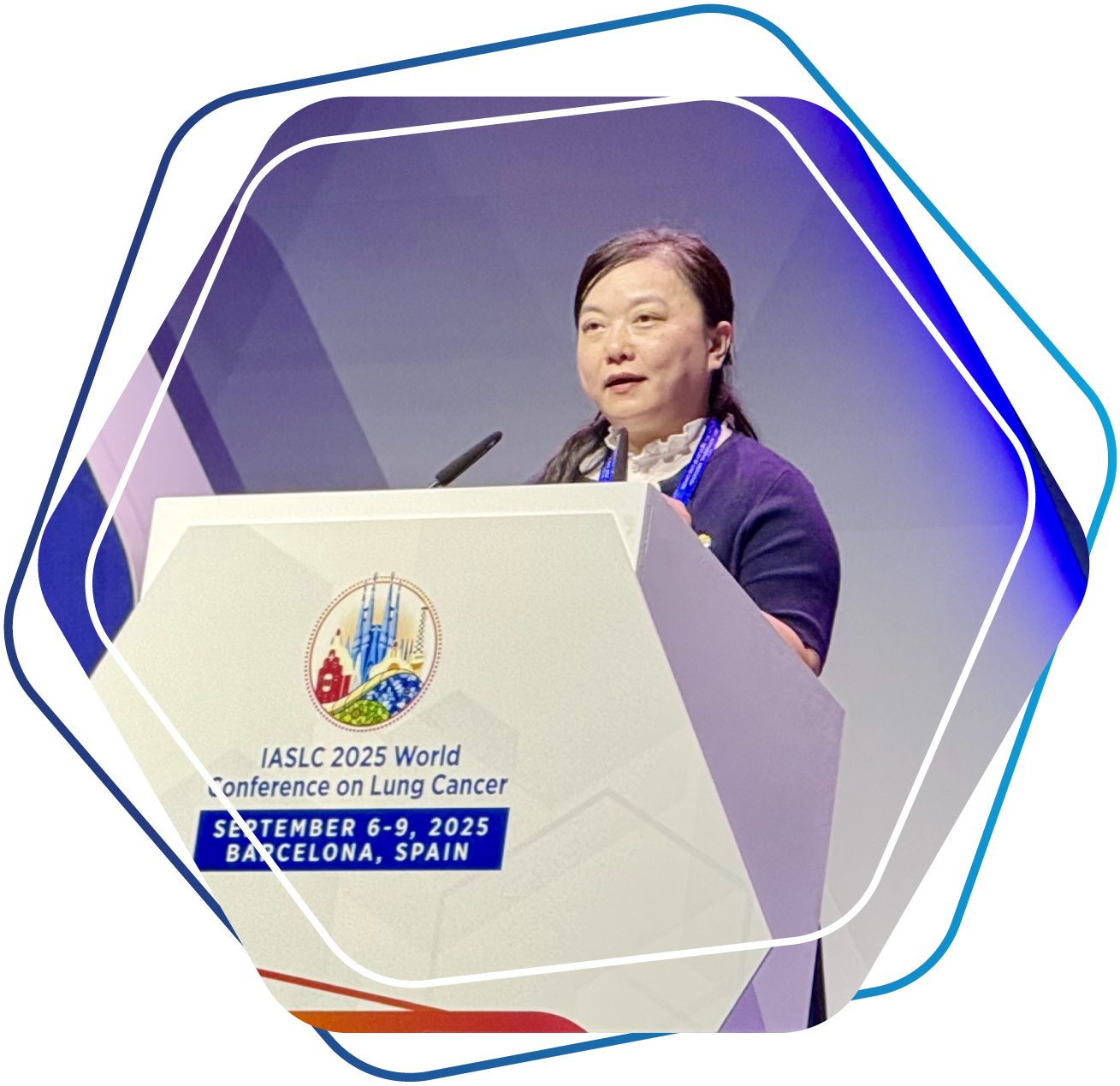
Presidential Symposium 2 with Lectureship Award Presentations
With on-demand access, registered WCLC 2025 attendees can still watch Nan Bi, MD, and other experts present much-awaited data during the second Presidential Symposia. Learn more
The trial compared hypofractionated radiotherapy (HypoRT) with a standard course of conventional radiotherapy (ConvRT) in the context of concurrent treatment with chemotherapy for LS-SCLC.
“Hyperfractionated radiation regimens are standard; however, due to logistical issues, the high-dose conventional regimen is not widely used clinically,” Dr. Bi said. The development of modern radiation techniques, such as intensity-modulated and image-guided approaches, provides technical assurance for protecting normal organs. In this context, HypoRT may improve treatment tolerability.
The trial’s investigators sought to evaluate the safety and efficacy of HypoRT versus ConvRT in patients with LS-SCLC in a randomized phase III study conducted across 16 hospitals in China.
A total of 530 patients were randomized to receive either HypoRT (45 Gy in 15 daily fractions over 3 weeks) or ConvRT (60 Gy in 30 daily fractions over 6 weeks), with RT started no later than the third cycle of chemotherapy.
Radiotherapy was intensity-modulated in both arms. All patients received 4 to 6 cycles of etoposide combined with carboplatin or cisplatin as chemotherapy.
The primary endpoint was 2-year overall survival (OS), and key secondary endpoints included 2-year progression-free survival (PFS), 2-year locoregional recurrence-free survival (LRFS), and toxicities.
Dr. Bi said that the final analyses were conducted earlier than planned, prior to the OS data reaching maturity, as consolidation durvalumab had become the new standard of care during the study.
At a median follow-up of 43.4 months, the median OS in the HypoRT arm (n = 261) was 40.2 months, compared with 47.9 months in the ConvRT arm (n = 269; hazard ratio [HR] = 1.04; 95% confidence interval [CI] = 0.81–1.33). HypoRT did not meet the non-inferiority threshold for OS compared to ConvRT.
The median PFS was also similar between the two arms: 16.5 months with HypoRT and 18 months with ConvRT (HR = 1.06; 95% CI = 0.86–1.32; p = 0.75). Similarly, there were no significant differences between the arms regarding LRFS.
Notably, the frequency of grade 3 or higher toxicities, including hematologic toxicities, was lower with HypoRT than with ConvRT (48.7% vs. 67.7%; p < 0.001). Grade 2 or higher radiation pneumonitis was nearly half as frequent with HypoRT (7.7%), compared to ConvRT (14.5%; p = 0.013). Lymphopenia (both ≥ grade 2 and ≥ grade 3) was also lower with HypoRT than with ConvRT. No significant differences were observed regarding late adverse events.
Furthermore, the rates of persistent ≥ grade 2 lymphopenia were lower with HypoRT than with ConvRT: 34.3% versus 48.7% (p = 0.001) of patients 1 month after radiotherapy, and 14.4% versus 28.7% (p = 0.013) of patients 6 months after radiotherapy.
Based on these findings and potential immune-sparing benefits, further investigation of HypoRT with immunotherapy is warranted, Dr. Bi said.
Corinne Faivre-Finn, MD, PhD, Professor of Thoracic Radiation Oncology at the University of Manchester, called out specific characteristics of the study population—such as 30% without smoking history and receipt of prophylactic intracranial radiation in over half the subjects—as being different from a typical patient with LS-SCLC treated in Western countries.
The key take-home message from this first phase III randomized study in the modern radiotherapy era is that it supports the feasibility of HypoRT with concurrent chemotherapy, yielding good outcomes, Dr. Faivre-Finn said.
She added that results may not yet signal a new standard of care, as the findings need to be generalized in a broader population. She suggested that HypoRT may be a good option with respect to service constraints, those undergoing radiotherapy alone, or receiving sequential chemotherapy and radiotherapy because of increased frailty.