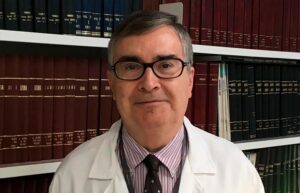






Presenter Profile: Pilar Garrido, MD, PhD
Medical Oncology Hospital Universitario Ramón Y Cajal, Madrid
ILCN: What is your presentation about?
Dr. Garrido: This presentation examines gender bias and career advancement in the field of oncology. Despite the significant feminization of the medical profession, women remain markedly underrepresented in leadership roles. Progress has been slow, and current evidence does not support the notion that this disparity will resolve over time without intervention.
Therefore, it’s essential to consider the underlying causes, including conscious and unconscious bias, as well as the pervasive influence of impostor syndrome.
Understanding these factors helps promote effective initiatives. Actions can be taken at multiple levels: individually, within medical societies, and across the broader professional community. Each level plays a vital role in driving meaningful and lasting change.

Is She the Right Fit for the Position? Navigating Gender Bias and Career Advancement
13:45 CEST, Monday, September 8 • Room 03
During the Navigating Gender Equity in the Daily Life of a Thoracic Oncologist session, Pilar Garrido, MD, PhD, discusses approaches to gender bias and career advancement in oncology. LEARN MORE
ILCN: Why is this topic timely or important in 2025?
Dr. Garrido: We can’t afford to lose half of our profession’s talent. Many outstanding women currently hold clinical, research, or teaching roles on the lower levels of the professional ladder, where they often receive limited recognition and encouragement to advance.
In my view, leadership diversity not only strengthens and enriches teams but is also recognized and valued by patients, and ultimately contributes to better organizational performance and the delivery of more inclusive healthcare.
In fact, I’m not sure what the outcome would be if we repeated the well-known experiment comparing the résumés of “John” and “Jennifer” in 2025. The original study revealed a significant gender bias, with “John” being perceived as more competent and hirable than “Jennifer,” despite identical qualifications.
Therefore, it is essential to actively promote talented women, equip them with the necessary skills for career progression, and understand the reasons why some leave the field to effectively address these barriers.
ILCN: What does a more gender-equitable future look like in the field of oncology, and what is still standing in the way?
Dr. Garrido: A more gender-equitable future in oncology is one where opportunities, leadership roles, recognition, and resources are accessible to all talented professionals, regardless of gender.
According to the European Society for Medical Oncology (ESMO) Women for Oncology surveys, key barriers that remain include challenges in achieving work-life balance and persistent cultural and institutional obstacles, which continue to limit the full participation and advancement of women in the field.
ILCN: What are you most looking forward to at this year’s World Conference?
Dr. Garrido: I’m looking forward to engaging with leading experts in lung cancer research and learning about the latest advances in the field. Equally exciting is the opportunity to connect with friends and colleagues from around the world, exchange ideas, and build collaborations that can drive meaningful progress in both clinical practice and research.
ILCN: What do you hope the audience takes away from your presentation?
Dr. Garrido: I hope the audience takes away a sense of community and understands that organizations like IASLC and ESMO W4O are there to provide support. I also hope that many men attend the session, because gender equity is not exclusively a women’s issue.
Additionally, I believe it is especially important for early-career colleagues to recognize these disparities early on. Often, opportunities may seem equal at the beginning of a career, but it can already be too late by the time the differences become apparent.
Raising awareness among the next generation—both men and women—about the importance of advocating for equity is also important to me.