





As precision oncology continues to expand, so does the complexity of interpreting molecular test results and translating them into patient care. Molecular tumor boards (MTBs) can bridge that gap—bringing together oncologists, pathologists, and molecular experts to review genomic data and guide evidence-based treatment decisions. However, despite their growing importance, MTB structure and implementation vary widely across institutions and countries.
Recognizing this inconsistency, the IASLC convened a global panel of experts to develop a consensus statement defining the essential elements of an effective MTB. The resulting framework, recently published in the Journal of Thoracic Oncology, outlines the adaptable guidance for both new and established MTBs.

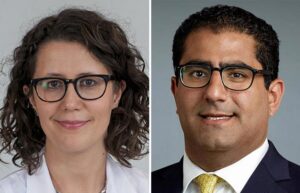
To learn more about the recommendations for lung cancer care, ILCN spoke with lead author Mihaela Aldea, MD, PhD, a medical oncologist at the Gustave Roussy Institute in Villejuif, France, who helped steer the consensus effort. During the interview, Dr. Aldea discussed the project’s motivation, key takeaways, and practical steps for institutions seeking to strengthen their MTBs.
ILCN: Could you give readers a brief overview of the consensus statement and what stood out to you about the findings?
Dr. Aldea: Our IASLC consensus defines the minimum “must-haves” to run an effective MTB as well as a practical framework for triage, discussion, reporting, and quality metrics. Using a modified Delphi method with 37 international experts, we concluded that every MTB needs, at a minimum, a tumor-specific medical oncologist plus a molecular expert, such as a molecular pathologist and/or clinically experienced molecular biologist.
We recommend scheduled meetings with rapid turnaround—avoid greater than 14 days from result to discussion—a standardized synoptic report, and ranking treatment options by actionability level (e.g., ESMO Scale for Clinical Actionability of Molecular Targets (ESCAT) or Memorial Sloan Kettering’s OncoKB precision oncology knowledge base). What stood out? We tailored guidance to the maturity of the MTB (new vs. experienced), and we explicitly endorse recommending options outside one’s institution to reduce inequities.
ILCN: What was the primary challenge or gap in current MTB practices that prompted this consensus effort?
Dr. Aldea: Access and consistency. Globally, MTB access is uneven, and commercial reports are not a substitute for multidisciplinary interpretation within clinical context. We also saw variability in who sits on these boards, what gets discussed and how quickly, and how recommendations are documented—hence the need for harmonized minimum standards and a shared reporting template.
ILCN: What specialties/members are essential for an effective molecular tumor board—and why are those roles critical?
Dr. Aldea: Indispensable: One, a tumor-specific medical oncologist to prioritize targets, sequence therapies, and align with trials; and two, a molecular expert (molecular pathologist and/or clinically exposed molecular biologist) to validate assay robustness, interpret variants (somatic vs. germline vs. clonal hematopoiesis), reconcile tissue versus liquid results, and advise on confirmatory testing. Other important but situational roles include a tumor-specific anatomic pathologist, a clinical geneticist, a clinical trial specialist, and a bioinformatician.
ILCN: For clinics hoping to start or strengthen their own MTB, what practical steps or resources would you recommend?
Dr. Aldea: There are a handful of steps and resources that could be used, including a pre-MTB triage run jointly by the oncologist and molecular expert to prioritize complex/urgent cases while newer MTBs review more broadly to build experience. We recommend meeting on a schedule that prevents delays of more than 14 days; aim for an hour, flexing up to 2 hours for complex cases. Use a synoptic report template capturing clinicopathologic data, biomarker methods/findings (including sample details), and clear, ranked recommendations, such as standard, trials/early access programs, or off-label with rationale.
Additionally, boards should prioritize actionability scales (ESCAT/OncoKB) over opinion; list options even if they are not reimbursed locally, and include disclaimers where appropriate. Boards can leverage virtual and hub-and-spoke models. When needed, refer complex cases to expert MTBs or create regional or national hubs to centralize expertise. We also advise investing in administrative support, checklists, and protected clinician time. And push for reimbursement for MTB activities.
Lastly, improve trial matching—integrate next-generation sequencing with local trial platforms and consult national registries. MTBs should flag eligible trials even beyond the institution.
ILCN: Looking ahead, what do you hope these conclusions will change—both in terms of clinical workflow and patient care?
Dr. Aldea: I hope for faster, more consistent decisions: routine triage, structured discussion, standardized reports, and clearer, ranked recommendations (and documentation in the medical record). Also, broader access, including formal pathways to recommend trials or therapies outside the home center, expert MTBs reviewing external cases, and the growth of regional hubs.
Measurable value, such as quality metrics that matter—change in management attributable to MTB input, matched-therapy rates, and time intervals from report to treatment start. And future-proofing, with a readiness for proteomic and transcriptomic biomarkers as well as for artificial intelligence tools to streamline case preparation, minute-taking, and even decision support—under strict data-protection rules.
ILCN: What message would you most like to leave clinicians on MTBs?
Dr. Aldea: An effective MTB is not defined by the size of the panel, but by its core pairing—an oncologist who is a bit of a molecular expert, and a molecular expert who is a bit of an oncologist. This mutual understanding is what makes the discussion truly translational. When combined with a standardized report and the discipline to act on evidence quickly—even when the best option lies outside one’s own institution—it turns the MTB from a meeting into a real decision-making tool for patient care.