




-
Interim NADIM ADJUVANT Data Suggest Adjuvant Chemo-IO May Reduce Recurrence Risk in Patients Following Complete Resection
-
Final FLAURA2 OS Data Show Osimertinib Plus Chemo Offers Benefit Compared with Monotherapy
-
Potential Impact of GLP1-RAs on TKI-induced Weight Gain in Patients with NSCLC
-
No “Known” Risk Factors: The Health Consequences of Radiation Therapy
-
Discussion Covered Updates, Strategies, and Controversies in Lung Cancer Staging
-
No PFS, OS Benefit Seen in Final Results from PACIFIC-2
-
WCLC Attendees Hear Preview of Proposed Changes for the 9th Edition of the TNM Staging Classification for Thoracic Cancers
-
Treatment of Immunotherapy-Related Dermatologic Toxicities: An Interview with Dr. Mario Lacouture
-
A Holistic Approach to Patient Care
Sign up for news updates
January 2021
-

Patient Advocate Comment: Amivantamab for Exon 20
Amivantamab for Exon 20-Related NSCLC: Excitement in the Patient Community We look forward to Dr. Joshua Sabari’s presentation during the oral abstract presentation session “OA04: new Data from Rare EGFR Alterations,” with the welcome CHRYSALIS study results of 8.3 months median progression-free survival and a median overall survival of 22.8 months for this novel EGFR-MET…
-

Comparing Patient-Reported Outcomes in the CROWN Study
The abstract “Patient-reported outcomes from the randomized Phase 3 CROWN study of first-line lorlatinib versus crizotinib in ALK+ NSCLC” by Mazieres et al., presents a welcome analysis of symptoms and health-related quality of life (QOL) in those patients receiving the ALK inhibitors crizotinib vs. lorlatinib. We at ALK Positive, a patient-directed support and advocacy group,…
-

Cultural Perceptions of End-of-Life Communication
Palliative and end of life care discussions are significant and essential, yet sensitive and challenging. Cultural perceptions of pain and end of life can filter nuances in provider communication in ways that may impact team trust, acceptance, and care for the patients. In their WCLC abstract, Bonnie Leung, NP, and colleagues explored this topic with…
-
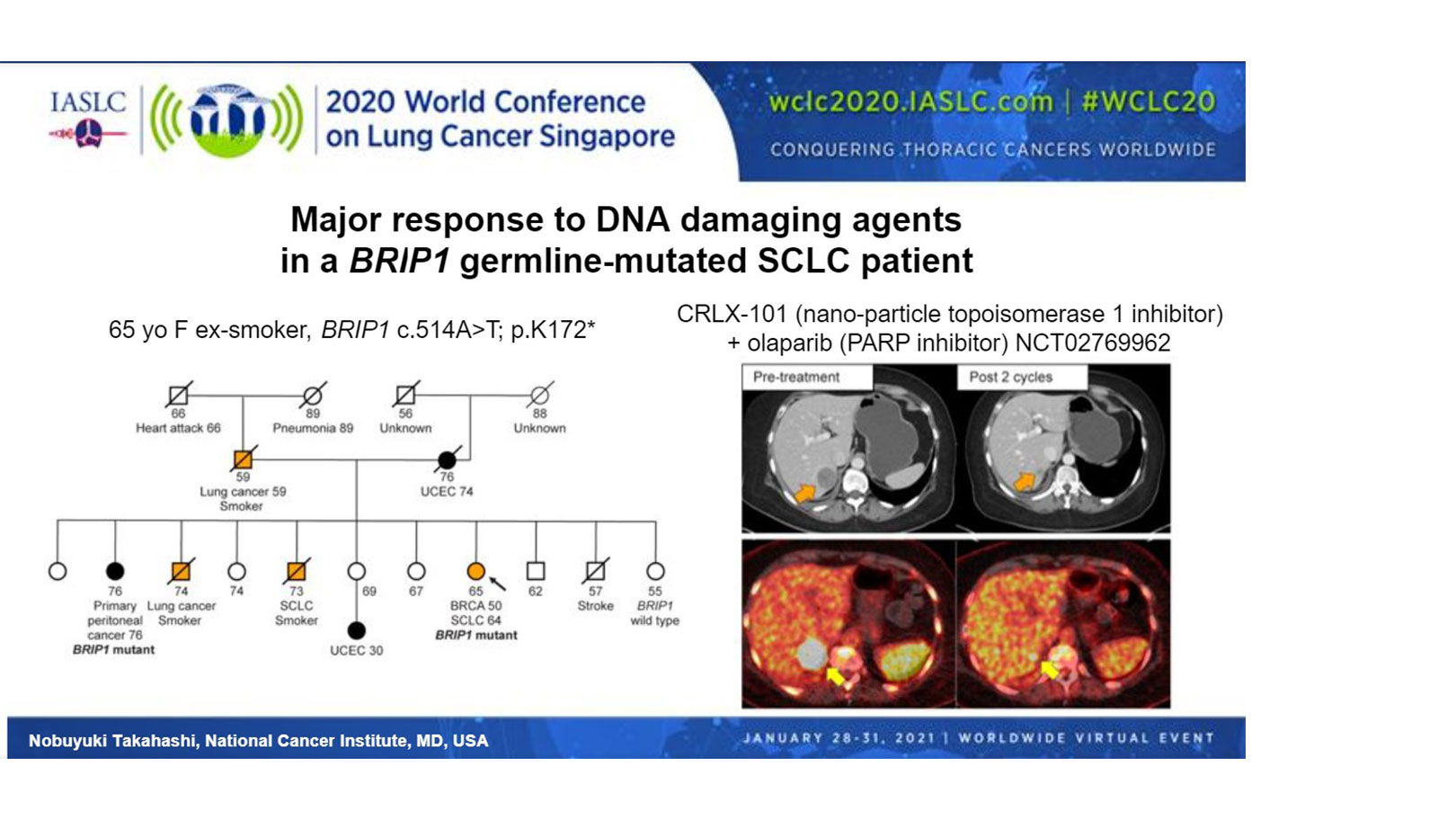
Hereditary Predisposition Plays a Larger Role in SCLC Development Than Previously Recognized and May Inform Personalized Treatment
Whole-exome sequencing reveals that almost half of all patients with small cell lung cancer (SCLC) have a deleterious germline mutation which may be associated with the development of their disease (Abstract OA11.05). Moreover, these mutations could lend themselves to targeted therapy and screening in about 10% of individuals—a treatment approach for SCLC that has remained…
-

Presidential Symposium Findings
Read the full articles for detailed summaries of each presentation. TALENT: This national lung cancer screening study conducted in Taiwan in 12,011 individuals, uncovered the presence of lung cancer in 2.6% of the study population. These results are striking, not only because they exceed the 1.1% and 0.9% lung cancer detection rates documented in the…
-
ADAURA: Data is Only Part of the Story
Patient Research Advocate (PRA) and 12-year survivor, Jill Feldman, discusses scientific and humanistic concerns regarding the ADAURA trials current data on disease-free progression in NSCLC. As a patient, osimertinib has given Ms. Feldman the hope that she has not had since her diagnosis. As a PRA, there are concerns about the lack of information about…
-

Patient Comment on Mobocertinib for Exon 20
Mobocertinib for Exon 20-Related Lung Cancer of Great Interest to Patients My brother Kevin, who founded the Exon 20 Group at ICAN with me in early 2017, started on mobocertinib (TAK-788) in late Spring of 2017. It was Kevin’s first clinical trial, and he was very pleased to be under the care of study leader…
-
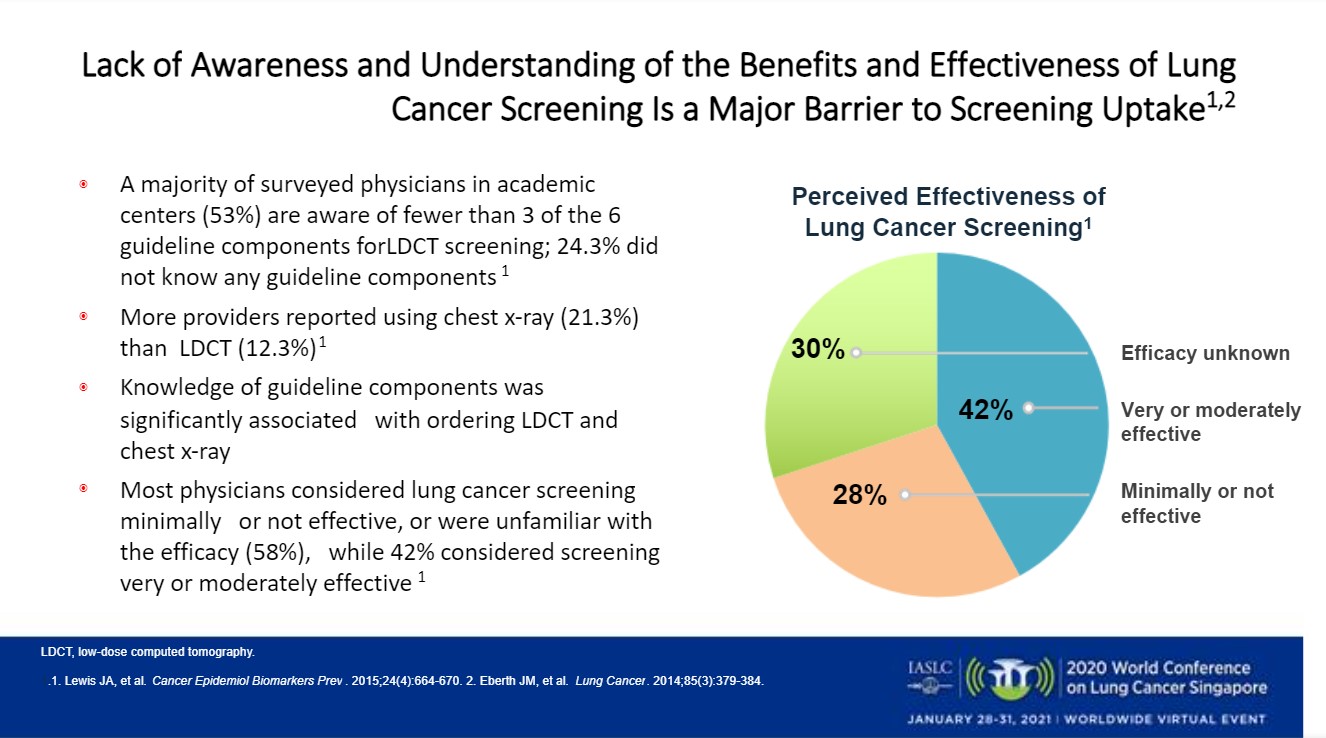
Improved Screening Uptake Could Help Double Lung Cancer Survival by 2025
Between 60% and 65% of patients with lung cancer receive their diagnoses at stage III or IV, meaning that one-third are unaware of their disease when radical surgery, either alone or with adjuvant therapy, could be curative. But what if those numbers were reversed? Pursuing the widespread use of low-dose CT screening to make early…
-
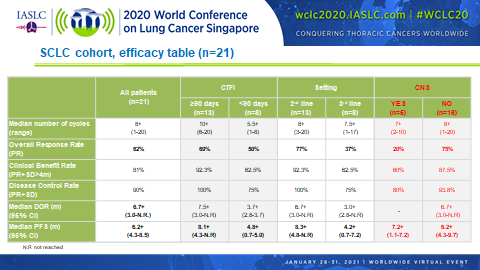
Promising Results for Lurbinectedin in SCLC When Paired with Irinotecan
Combined treatment with lurbinectedin and irinotecan appears to pack quite a punch in patients with relapsed small cell lung cancer (SCLC) according to the results of a phase Ib/II trial (Abstract OA11.04). The overall response rate (ORR) among 21 patients who had received up to 2 prior lines of treatment reached 62% overall, with a…
-
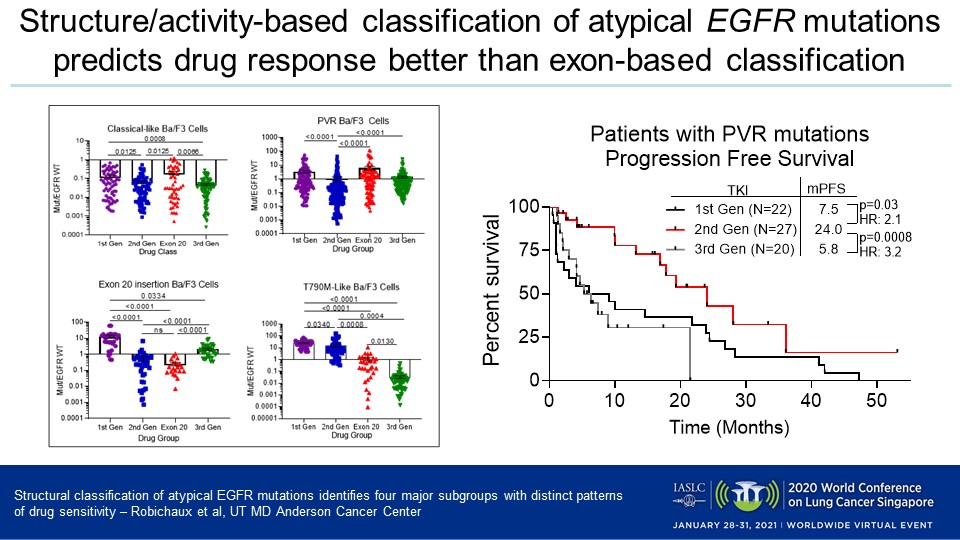
Deeper Understanding of EGFR Mutation Subgroups Will Further Personalize Treatment for NSCLC
New insights into the types of EGFR mutations that can arise in NSCLC may help guide decisions about the most appropriate targeted drugs for individual patients. A study by Jacqulyne Robichaux, PhD, of MD Anderson Cancer Center and colleagues (MA13.07) that used patient data, cell lines, and computerized models to analyze EGFR mutations found that the…
View ILCN Archives
Provider Resources
Popular Articles