




-
Interim NADIM ADJUVANT Data Suggest Adjuvant Chemo-IO May Reduce Recurrence Risk in Patients Following Complete Resection
-
Final FLAURA2 OS Data Show Osimertinib Plus Chemo Offers Benefit Compared with Monotherapy
-
Potential Impact of GLP1-RAs on TKI-induced Weight Gain in Patients with NSCLC
-
No “Known” Risk Factors: The Health Consequences of Radiation Therapy
-
Discussion Covered Updates, Strategies, and Controversies in Lung Cancer Staging
-
No PFS, OS Benefit Seen in Final Results from PACIFIC-2
-
WCLC Attendees Hear Preview of Proposed Changes for the 9th Edition of the TNM Staging Classification for Thoracic Cancers
-
Treatment of Immunotherapy-Related Dermatologic Toxicities: An Interview with Dr. Mario Lacouture
-
A Holistic Approach to Patient Care
Sign up for news updates
Evolving Standards of Care
-

Addition of Nivolumab to Neoadjuvant Chemotherapy in NSCLC: Results of CheckMate-816
Platinum-based chemotherapy, given either before (neoadjuvant) or after (adjuvant) surgery for stage II and III NSCLC is associated with a 5% improvement in long-term survival. Despite consensus guidelines recommending its use, uptake of chemotherapy for earlier-stage NSCLC remains low when compared with other common cancers, and, currently, most chemotherapy that is given is delivered postoperatively.…
-

Second-Line, Biomarker-Driven Therapies for Squamous NSCLC: Report on Lung-MAP SWOG S1400
The Lung Master Protocol (Lung-MAP; S1400) was a biomarker-driven master protocol. This trial was originally designed to address the relative paucity of effective, targeted therapies in squamous cell lung cancer, compared to non-squamous NSCLC subtypes.1 This trial was initiated in 2014, when the standard-of-care treatment for patients with advanced squamous cell lung cancer consisted of…
-

China’s Domestic PD-1/PD-L1 Inhibitors Demanding Global Attention
The growth of these domestic drugs should shine a light on the lack of diversity in many international clinical trials in immunotherapy.
-
Biomarkers May Illuminate the Path Forward for PARP Inhibitors in SCLC
Despite U.S. Food and Drug Administration (FDA) approvals for the addition of anti–programmed death-ligand 1 (PD-L1) therapies to a first-line combination of etoposide plus a platinum-based agent for extensive-stage small cell lung cancer (SCLC).1 ,2 Overall survival (OS) remains poor—roughly 1 year for patients diagnosed with extensive-stage disease. Promising new agents in relapsed disease, such…
-

NCI Launches the Cancer Moonshot SM Biobank to Accelerate Research in Cancer Treatment
The U.S. National Cancer Institute (NCI) Cancer Moonshot Biobank launched in September 2020, with the aim of accelerating cancer research by creating a resource of well-annotated, longitudinal cancer biospecimens from patients receiving standard-of-care therapy. The Biobank will serve research needs of funded grantees working to better understand the mechanisms and systems biology of drug resistance…
-

Voice from Asia: Combination of Immune Checkpoint Inhibitors With Chemotherapy for Advanced Non-squamous NSCLC
The immune checkpoint inhibitors (ICIs) monotherapy has resulted in significant improvements in PFS and OS in advanced NSCLC when compared with chemotherapy alone, and it has become the standard of care as first-line treatment for patients with EGFR- and ALK-negative advanced NSCLC1 ,2 . However, patients with high PD-L1 expression are preferred population and almost…
-

ASCO and Ontario Health Publish Joint Guideline Update on Systemic Therapy for Stage IV NSCLC
In February 2021, the American Society of Clinical Oncology (ASCO) and Ontario Health (Cancer Care Ontario) published a joint guideline update to the 2017 ASCO guidelines regarding systemic therapy for stage IV NSCLC. This update focused on therapy for patients with stage IV NSCLC with driver alterations, and it discussed treatment options for ROS1 fusions…
-

Immunotherapy Use in Patients With Lung Cancer and Comorbidities
Because nearly one-half of patients with advanced cancer are eligible for immune checkpoint inhibitor (ICI)–based treatment, these therapies are now in widespread clinical use.1 ICIs—whether as monotherapy, in checkpoint inhibitor combinations, with chemotherapy, or after concurrent chemoradiation—are now incorporated into treatment regimens for most types of lung cancer, resulting in prolonged responses for a small…
-

Increasing Understanding about the Role Biosimilar Agents Play in Everyday Practice: A Q&A with Dr. Gary Lyman (Part 2 of 2)
In September 2017, the US Food and Drug Administration (FDA) approved bevacizumab-awwb for the treatment of NSCLC, with the same indications as the tradename. Although bevacizumab-awwb is the only biosimilar agent specific to lung cancer, there are many in development, necessitating a firm understanding of the regulatory approval process and cost comparators for these agents.…
-
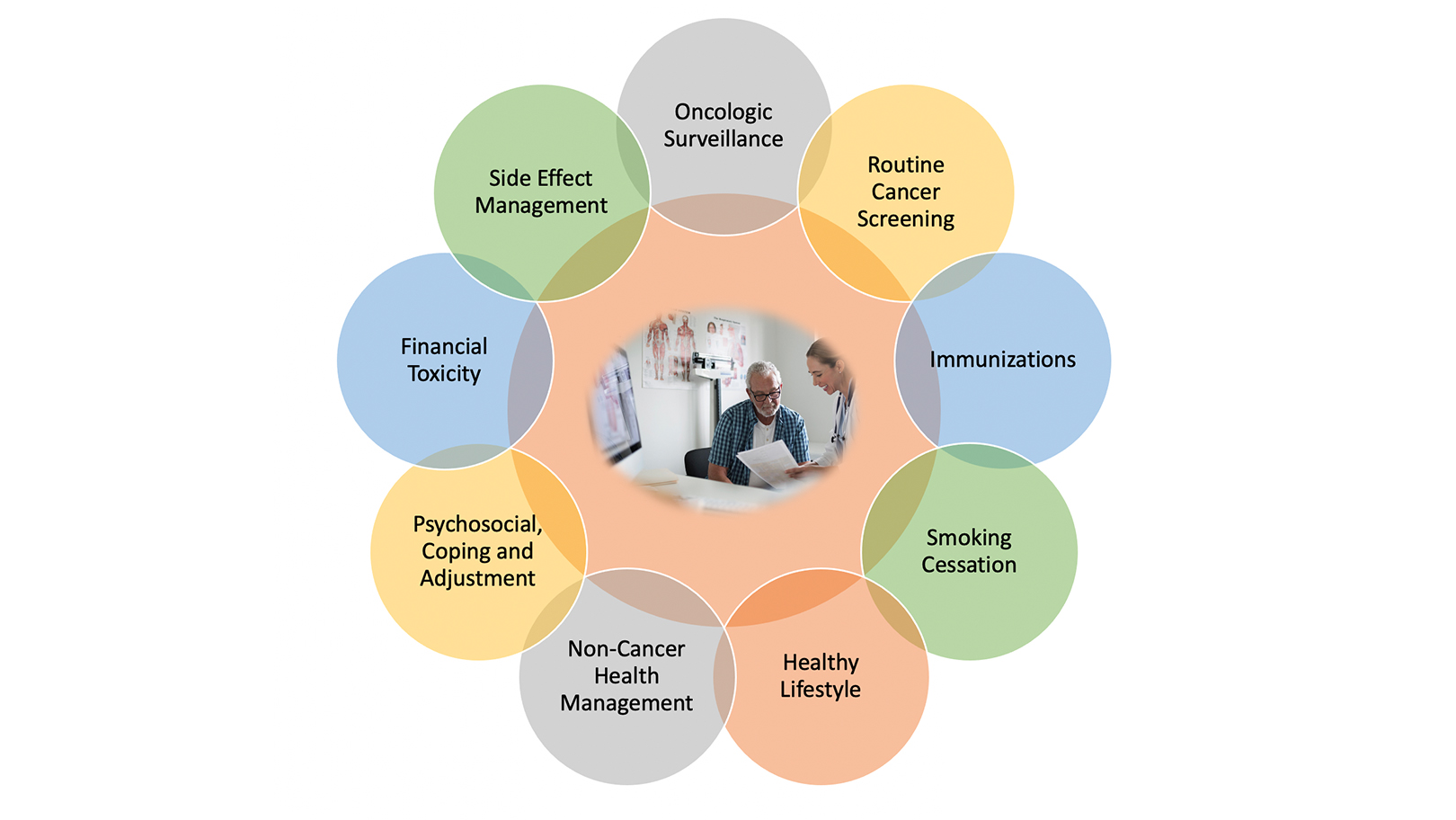
Ensuring Quality of Life During Lung Cancer Survivorship Requires a Multidisciplinary Team
Lung cancer is one of the most common cancers worldwide, with more than 2 million people diagnosed each year.1 Advances in early detection and treatment have resulted in more people surviving the disease. Nevertheless, in the United States, the overall 5-year survival rate is only 19% for all stages combined. However, in patients with localized…
View ILCN Archives
Provider Resources
Popular Articles