





-
Interim NADIM ADJUVANT Data Suggest Adjuvant Chemo-IO May Reduce Recurrence Risk in Patients Following Complete Resection
-
Final FLAURA2 OS Data Show Osimertinib Plus Chemo Offers Benefit Compared with Monotherapy
-
Potential Impact of GLP1-RAs on TKI-induced Weight Gain in Patients with NSCLC
-
No “Known” Risk Factors: The Health Consequences of Radiation Therapy
-
Discussion Covered Updates, Strategies, and Controversies in Lung Cancer Staging
-
No PFS, OS Benefit Seen in Final Results from PACIFIC-2
-
WCLC Attendees Hear Preview of Proposed Changes for the 9th Edition of the TNM Staging Classification for Thoracic Cancers
-
Treatment of Immunotherapy-Related Dermatologic Toxicities: An Interview with Dr. Mario Lacouture
-
A Holistic Approach to Patient Care
Sign up for news updates
October 2020
-

First Therapeutic Approval in 16 years for MPM
October 2, 2020—As part of the U.S. Food and Drug Administration’s (FDA) Project Orbis, the FDA approved combination nivolumab and ipilimumab for treatment-naive patients with unresectable malignant plueral mesothelioma (MPM). This is only the second FDA-approved systemic therapy for mesothelioma, and the first approval in 16 years. The approval was based on data from the…
-

Ending Stigma in Lung Cancer: The IASLC Participates in a Collaborative Summit Held by the National Lung Cancer Roundtable
Stigma is any thinking or behavior that produces internal shame or external judgment toward a person, place, or thing.1 In healthcare, stigma could be any sociocultural norm that prevents a patient’s access to or experience of high-quality care. With lung cancer in particular, patients often feel stigmatized by clinicians, patients, family, friends, and within themselves…
-
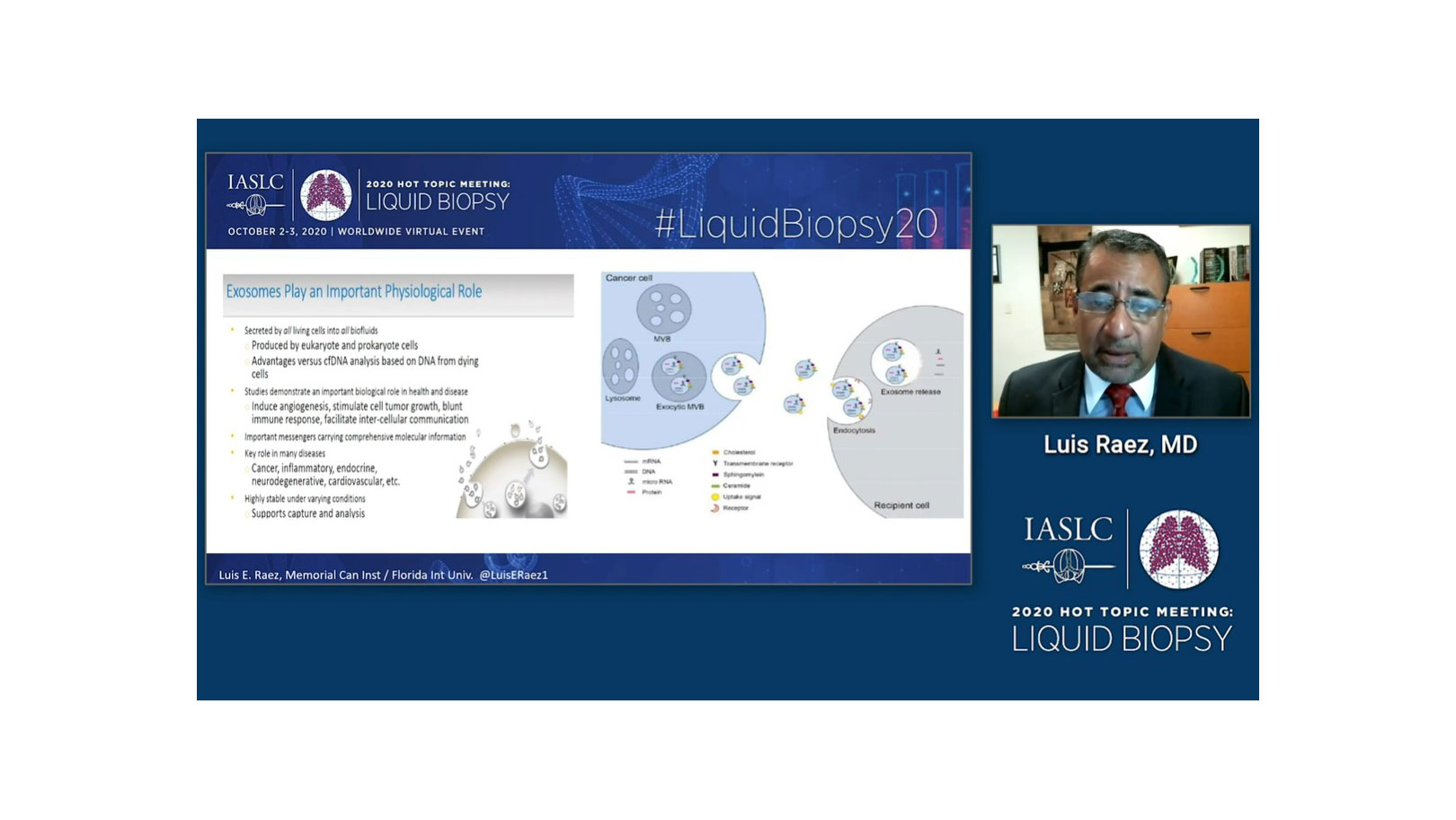
Cell-free RNA Affords Another Tool in Lung Cancer Diagnosis and Treatment Monitoring
Although cell-free DNA (cfDNA) has emerged as the favored nucleic acid to analyze in liquid biopsy samples, there are situations when this marker fails to provided necessary information. In such cases, cell-free RNA (cfRNA) might help fill the void. “Evaluating RNA in liquid biopsies is important because it can be useful for diagnostic, treatment-prediction, or even prognostic purposes,” according to Luis Raez, MD, of the Memorial…
-

Supporting the Detection of Early-Stage Disease with Use of Biomarkers
The NELSON trial and the US National Lung Cancer Screening Trial (NLST) marked major advances in lung cancer by establishing that low-dose computed tomography (LDCT) screening of high-risk individuals is effective at catching the disease in early stages when curative approaches can be used, in turn reducing mortality by 20% to 40%.1,2 The wealth of circulating biomarkers now under investigation begs the question of whether mortality can be reduced further…
-
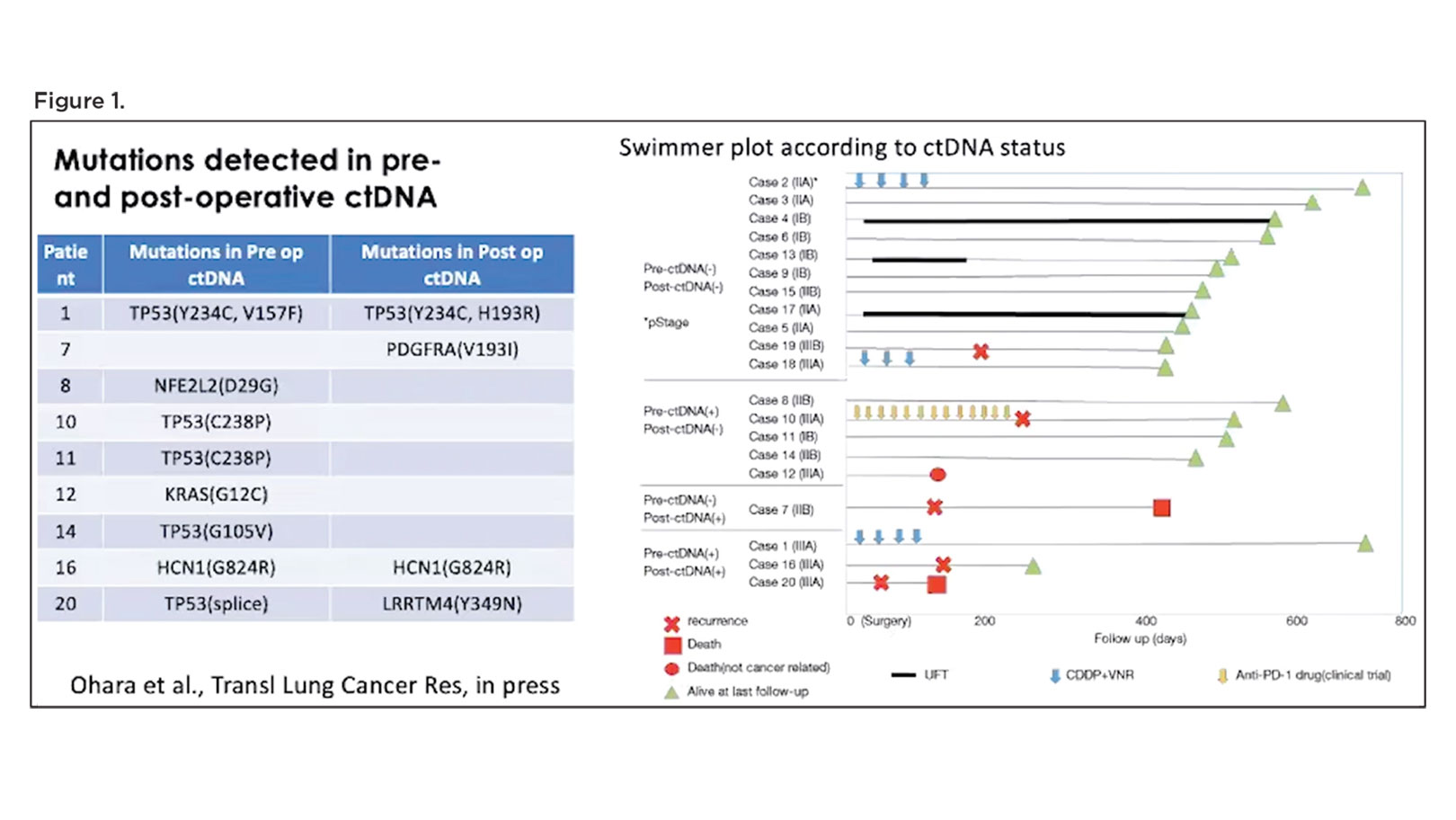
Leveraging ctDNA to Detect Minimal Residual Disease Following Surgery
Curative therapy remains elusive in early-stage NSCLC following surgical resection, sometimes even for patients with stage I disease. Adjuvant therapy can be of benefit, but only for a select few. As shown in the Lung Adjuvant Cisplatin Evaluation (LACE) meta-analysis, platinum doublet chemotherapy, the current standard of care following complete resection of stage II/III NSCLC, only improved 5-year survival by 5.4%.1 “There is clearly unmet…
-
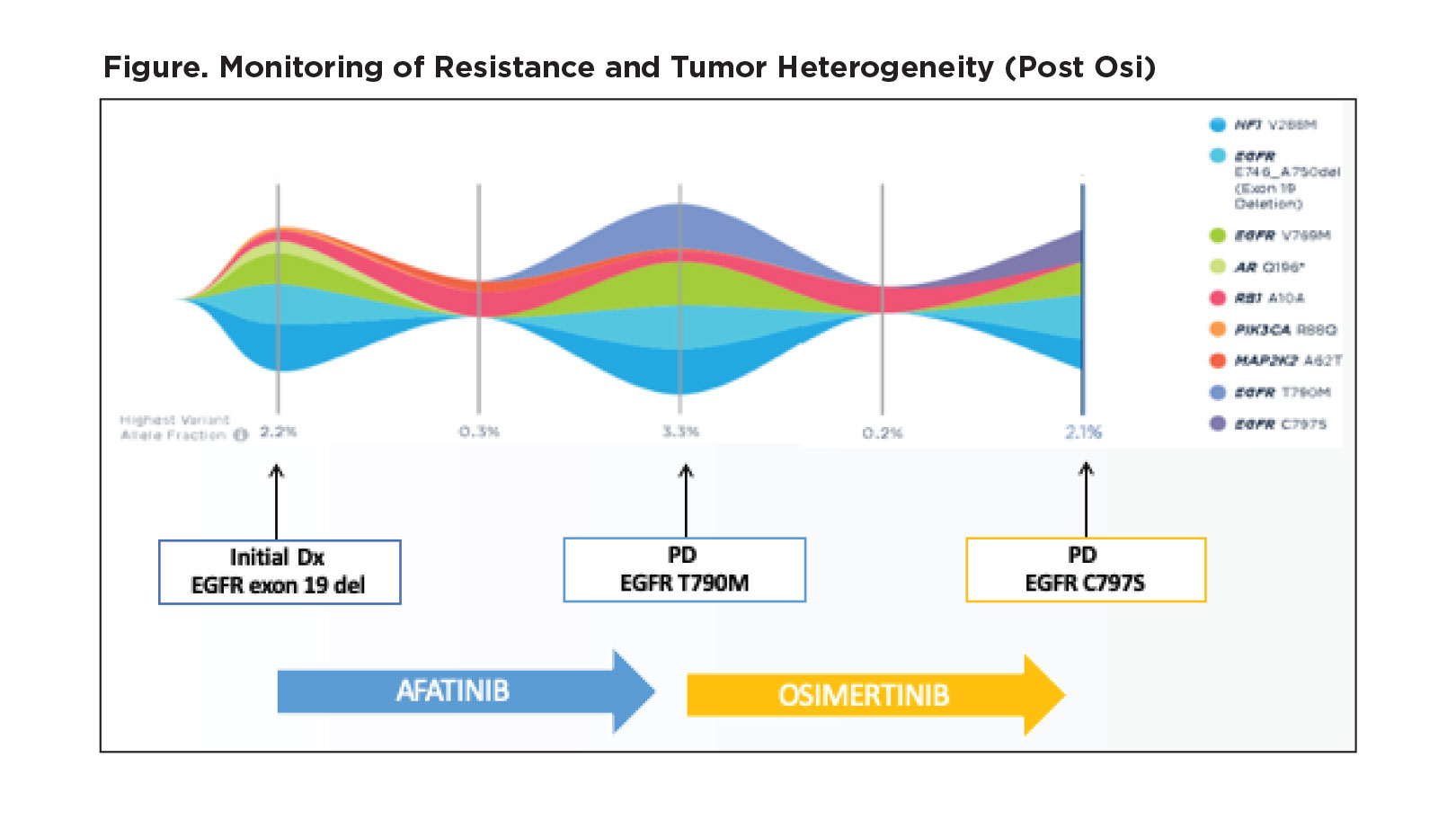
ctDNA Offers a Window Into Emerging Mechanisms of Resistance to Targeted Therapy
Targeted therapy has undoubtedly transformed the treatment landscape for metastatic NSCLC, with multiple agents now available to target seven different molecular drivers. In tandem with the growing treatment armamentarium, comprehensive molecular profiling has been critical in providing insight into the complexity of a patient’s disease and enabling precision treatment. “Tremendous progress has been made, and I think we are really improving our ability to deliver targeted therapy based on improvements in…
-

Dr. Christian Rolfo Previews the New IASLC Consensus Statement on Liquid Biopsy
In his keynote address during the IASLC 2020 Hot Topic Meeting: Liquid Biopsy, co-chair Christian Rolfo, MD, PhD, MBA, provided an overview of the fastpaced evolution of liquid biopsy. In 2018, at the time of initial discussions, it was only used for treatment-naive patients for whom tissue biopsy was insufficient or after acquired resistance to first- or second-generation EGFR TKIs. Since then groundbreaking research articles…
-
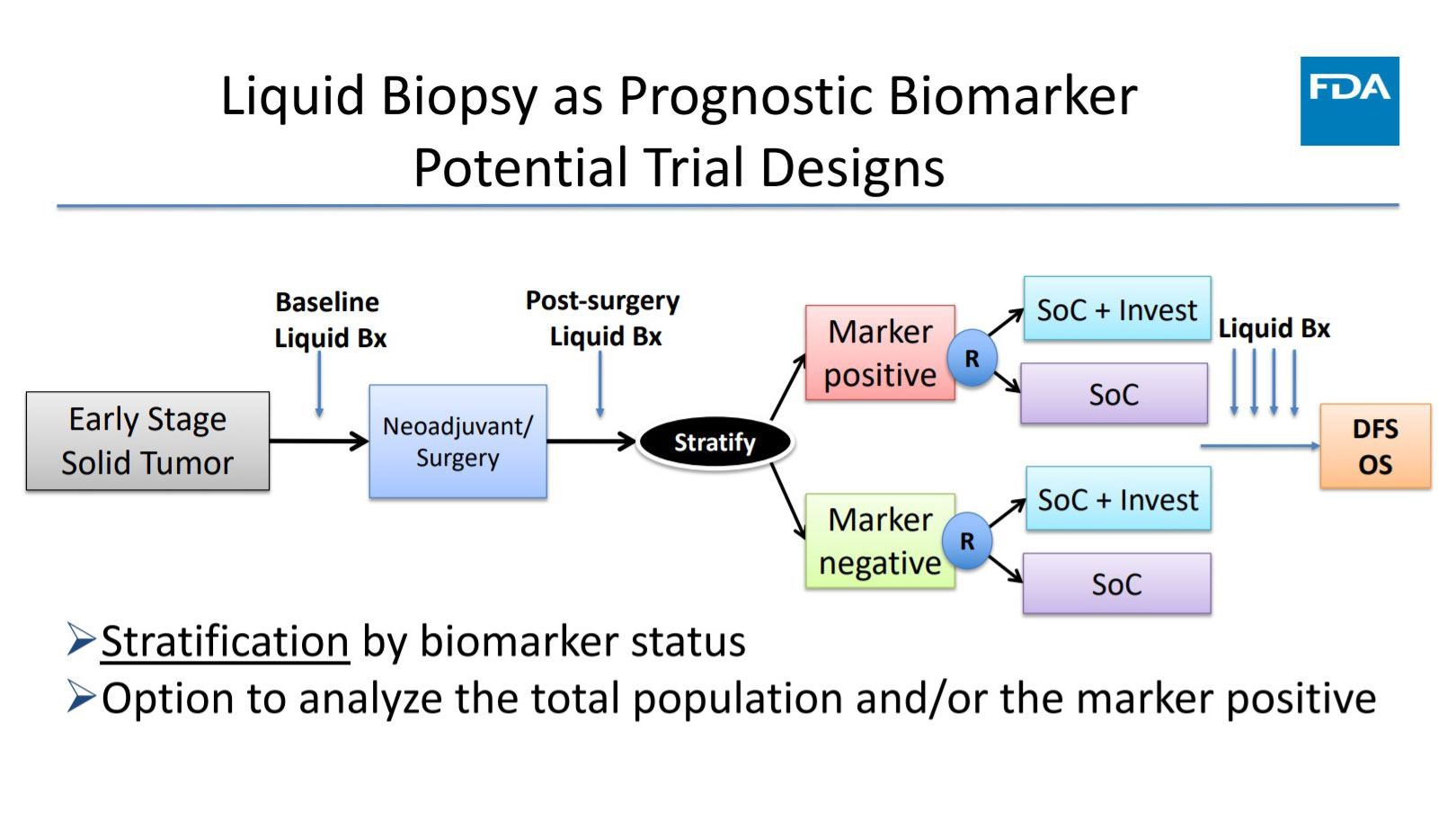
FDA Perspectives on the Use of Liquid Biopsy in NSCLC
The US Food and Drug Administration (FDA) recognizes the value of liquid biopsy in managing patients with cancer, and the agency is actively working to bring these assays to the clinic. Harpreet Singh, MD, Director of the Division of Oncology 2, shed light on past FDA efforts related to approval of liquid biopsy technologies as well as those currently underway. “Liquid biopsies for cancer require close interaction between the oncologist…
-
Biopsy Options Create New Decision-making Points for Clinicians
Understanding the differences in liquid biopsy approaches, as well as how they complement tissue, can be important to therapeutic selection and outcomes.
-
Declaración de IASLC: dejar de fumar tras un diagnóstico de cáncer
Como bien se sabe, el tabaquismo es una de las causas de cáncer y es responsable de 1 de cada 3 muertes por cáncer al año. Aunque se conocen los efectos nocivos de fumar, se subestiman los daños ocasionados por seguir fumando tras el diagnóstico de cáncer. Si los pacientes y sobrevivientes al cáncer siguen…

View ILCN Archives
Provider Resources
Popular Articles